


By Emre Konuralp · Updated October 2026
Whenever I share my villa life in Ubud on Instagram, someone asks about the geckos on the wall or the frog in the pool! Your curiosity—and a few worried messages—inspired this guide. Here is my honest experience of sharing a tropical home with Bali’s little visitors. Follow @ajourney for more real moments from my life here.
What Living in Ubud Has Taught Me About Tropical Homes, Everyday Visitors and Choosing the Right Villa
Bali’s greenery is one of the things I love most about living here. But those beautiful gardens, rice fields and open villas come with something that accommodation photos rarely explain: you are sharing the environment with animals.
Geckos on the walls, frogs in the garden and ants finding their way towards food can all become part of daily life. That does not mean every property has a pest problem. It does mean that the design of your accommodation matters, especially if you plan to stay for a while and cook regularly.
Living in Ubud has made me look beyond the pool and the view. I now pay much more attention to whether the kitchen and living area can actually be closed.
The short version
- Bali’s greenery means sharing your home with geckos, frogs and insects—this is normal, not a sign of a bad villa.
- My biggest tip: choose accommodation with a kitchen and living room you can close.
- Store food in sealed containers and clean crumbs quickly to avoid ants.
- Protect yourself from mosquitoes during the day too—dengue occurs in Bali.
- Never handle unfamiliar dogs, cats or monkeys; seek medical advice after any bite or scratch.
My Biggest Recommendation: Choose a Kitchen You Can Close
An open kitchen surrounded by tropical greenery can look wonderful. In practice, it is also accessible to geckos, frogs, rodents and insects. From my experience, that can make keeping the kitchen clean and protecting food more demanding than you expect.
The larger geckos are a particular issue for me. Their droppings can be surprisingly large, and finding them on a kitchen counter creates an obvious hygiene problem. Open counters also collect dust and other outdoor debris. Before preparing food, you may need to check and clean surfaces again, even if the kitchen was cleaned earlier.
If you intend to use the kitchen regularly, my recommendation is to choose a villa with a genuinely enclosed kitchen. Look for doors and windows that close, rather than a roof over an otherwise open space. Check ventilation openings and the gaps beneath doors, too.
An enclosed kitchen will not guarantee that no insect ever gets inside. However, it gives you much more control over food storage, cleaning and animal access.
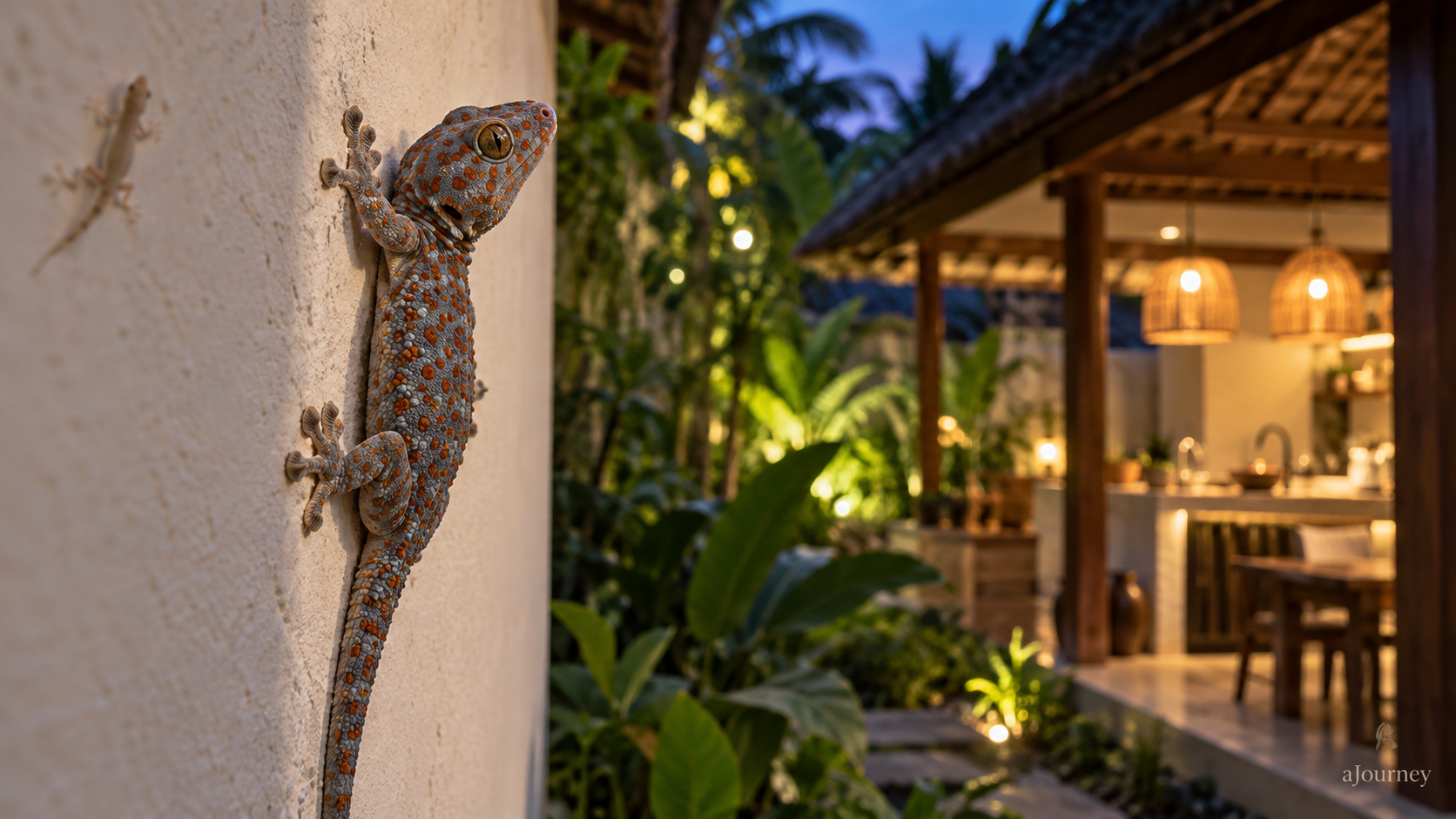
Small House Geckos and Larger Tokay Geckos
You may encounter small house geckos or the larger tokay gecko, often recognised by its spotted appearance and distinctive call. Watching one on a garden wall is very different from having one living directly above your food preparation area.
My concern is mainly the practical side: droppings on counters, cookware or other surfaces. Check above the worktop as well as the worktop itself. Exposed beams and spaces behind cupboards can be easy to overlook when viewing a property.
Keep utensils and dishes in closed cupboards, clean contaminated surfaces before cooking, and discard food that has been contaminated. Do not try to grab a gecko; ask the property manager for help if one repeatedly enters the kitchen.
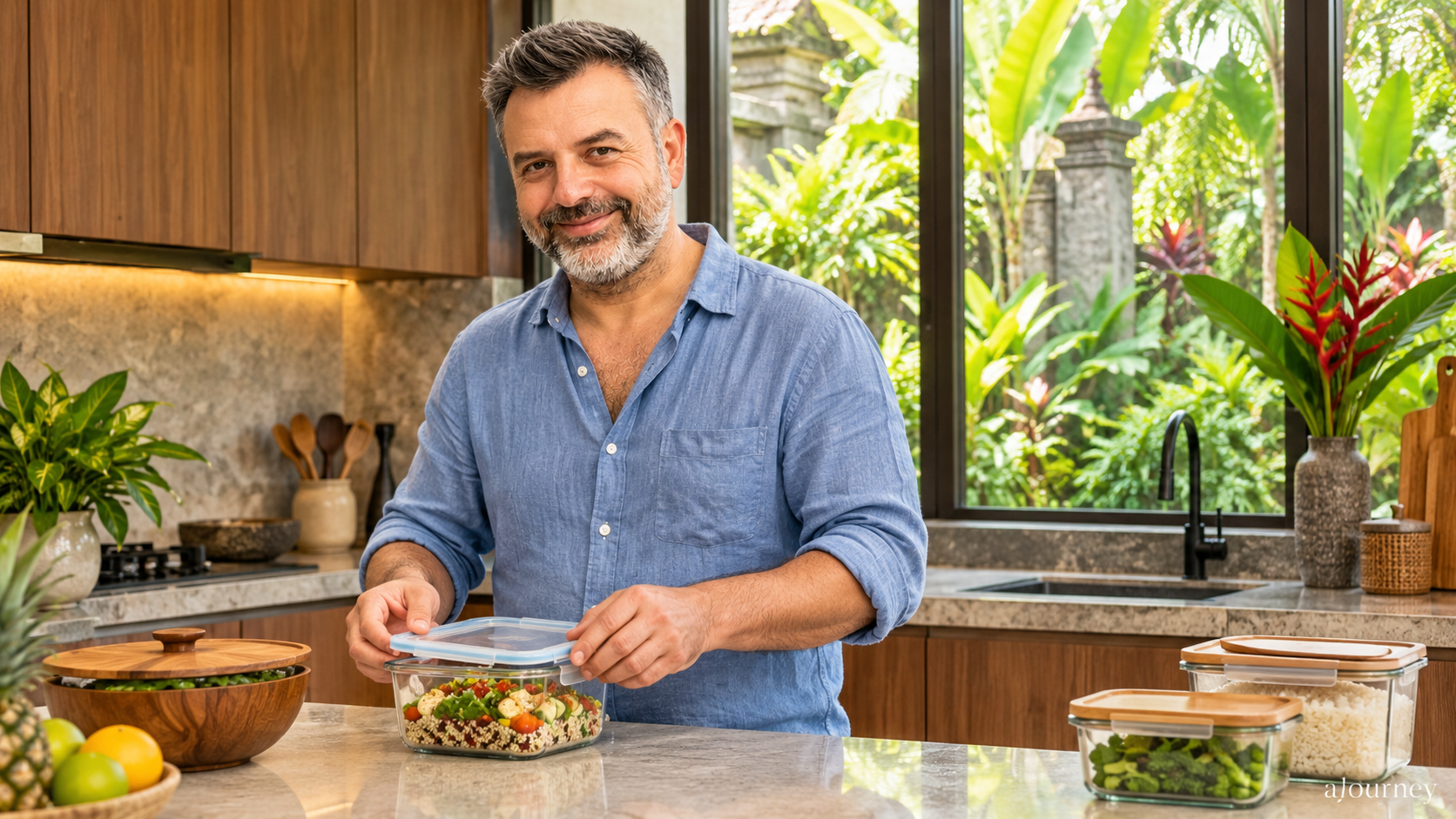
Ants, Food Storage and Kitchen Hygiene
Ants are another issue worth planning for. A few crumbs, an uncovered snack or a sweet drink left on a counter can quickly become an inconvenience.
- Use tightly sealed containers for dry foods and snacks.
- Clean spills and crumbs promptly, including beneath small appliances.
- Keep suitable perishable foods refrigerated; covering a dish does not make it safe to leave in tropical heat.
- Use a bin with a lid and arrange regular waste removal.
- Keep pet food and other attractants away from food preparation areas.
Repeated rodent sightings or droppings deserve a proper response from the owner. Ask for entry points to be repaired and for professional pest management. Avoid leaving exposed poison or traps where children, pets or wildlife can reach them.
A Closed Living Room Can Make a Big Difference
The same principle applies to the lounge. Open living areas can be beautiful, but they leave fewer barriers between you and insects or other garden visitors.
If you want to work comfortably, sit indoors in the evening or keep belongings protected, a living room with doors and screened windows is worth prioritising. For a longer stay, I would prefer a home that offers both: an outdoor terrace to enjoy the garden and an enclosed room to retreat to.
Cockroaches, Spiders and Other Unexpected Visitors
Cockroaches and spiders can occur in Bali, including around accommodation. A single sighting does not tell you everything about a property, but repeated sightings, droppings or obvious entry gaps should be addressed.
Before booking, ask how the property manages pests, how frequently it is cleaned and who responds when an animal gets inside. Check under the sink, around rubbish storage and behind kitchen appliances when you inspect the home.
Do not assume that every spider is dangerous, or that an unfamiliar one is harmless. Keep your distance and ask for help rather than handling it. Shake out shoes left outdoors and avoid putting your hands into dark gaps where you cannot see.
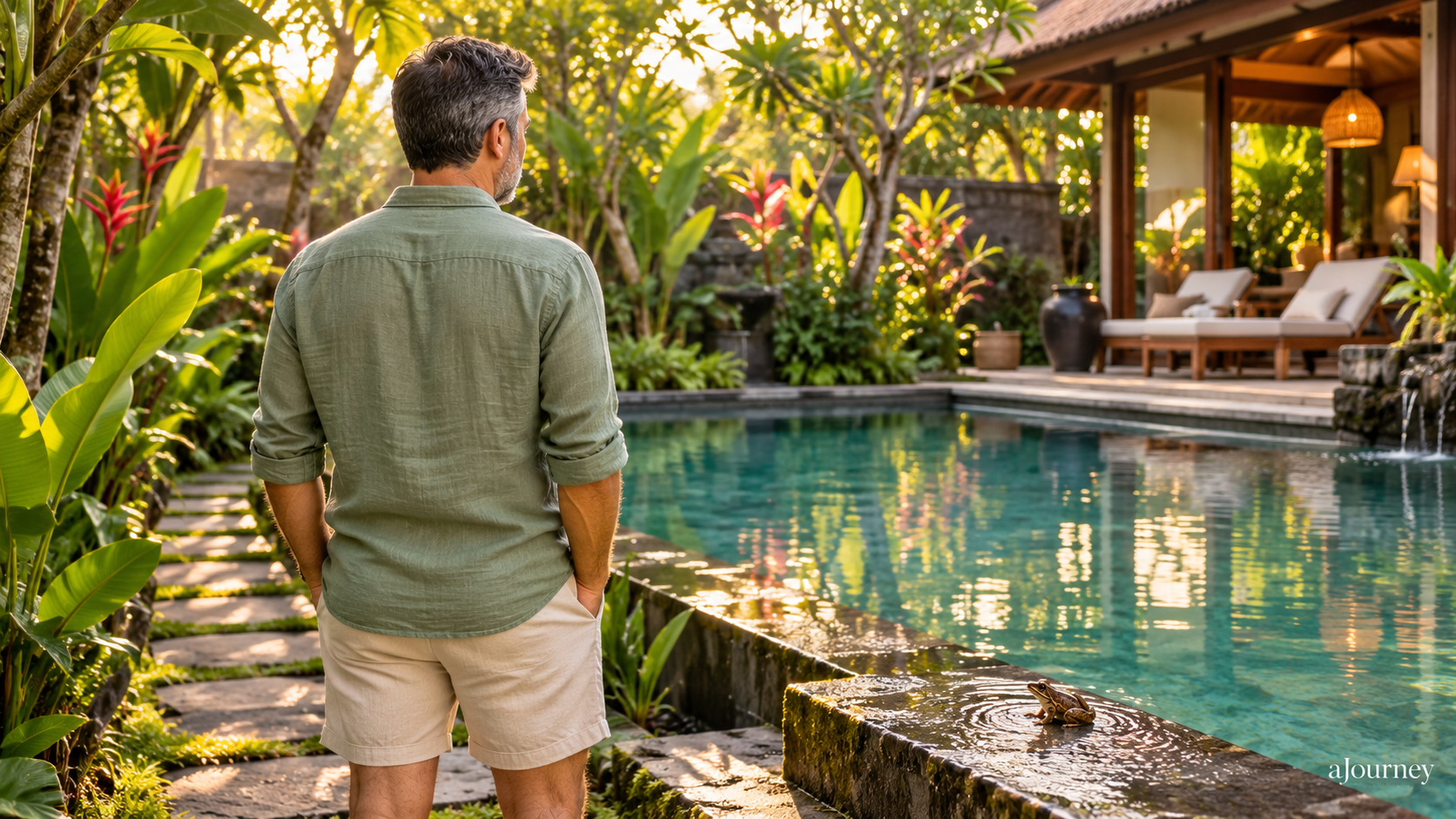
Frogs and Animals Around the Pool
Frogs and other small animals can enter garden pools. A private pool is still an outdoor part of the environment, especially when it sits close to plants and garden beds.
Look into the water before swimming, and ask the staff to remove an animal safely rather than catching it yourself. If an animal is dead or there is visible faecal contamination, wait for the pool team to assess and treat the water before using it.
Ask about pool cleaning, filtration and water treatment. Leaves, insects or an occasional frog do not automatically mean a pool is poorly maintained, but the owner should have a reliable maintenance routine and respond to contamination.
Homes Near Monkey Habitats Need Extra Consideration
If a house is near an area where monkeys live, an open kitchen and belongings left outside deserve extra thought. Accessible food, bags and loose objects may attract unwanted attention.
Ask the host specifically whether monkeys visit the property. Do not rely only on the distance shown on a map. Find out whether doors and windows can be secured and whether food storage is genuinely enclosed.
Avoid feeding monkeys or approaching them for a photograph. Keep food out of sight and follow staff instructions at monkey attractions. If a monkey takes something, ask staff for assistance rather than attempting to pull it away.
Are There Snakes in Bali?
I have not personally seen a snake in Bali so far. That is my experience, but it does not mean snakes are absent or that every location has the same conditions.
Bali has both non-venomous and medically dangerous venomous snakes. Local reptile rescue information documents species including bronzeback snakes and the Javan spitting cobra. Encounters can happen; I would not give a percentage or promise that a particular neighbourhood is snake-free. Source: Bali Reptile Rescue.
For a home beside dense vegetation, rice fields or waterways, ask the owner about previous sightings and their response procedure. Keep garden paths visible, reduce clutter and avoid leaving food waste that attracts rodents. These are practical precautions, not a guarantee.
- Use a torch on garden paths after dark and watch where you step.
- Do not reach into dense vegetation or concealed spaces.
- If you see a snake, move away, keep others and pets clear, and contact the property manager or a trained reptile rescuer.
- Do not handle, corner or try to kill it, and do not approach to identify it from its colour.
A suspected snakebite needs immediate emergency medical care. Keep movement to a minimum and arrange urgent transport. Do not cut the wound, suck out venom or apply a tight tourniquet. Do not delay treatment to catch the snake. Further information: WHO.
Mosquitoes: Think About Daytime Protection Too
Mosquitoes deserve more attention than an occasional nuisance bite. Dengue occurs in Bali, and the mosquitoes that spread it are active during the day. Protection should therefore continue beyond the evening. Smartraveller; WHO.
Use a repellent containing DEET, picaridin or IR3535 according to its label, wear covering clothes when practical and choose accommodation with window screens. Empty small containers that collect water and ask the owner to manage standing water around the property. A maintained pool does not remove the need to check pots, buckets and other water-holding containers.
If you develop fever, significant aches or a rash, seek medical advice. Severe abdominal pain, persistent vomiting or bleeding require urgent care, including if the fever has started to settle. If dengue is suspected, avoid aspirin and ibuprofen until a clinician advises you. Source: WHO.
Dogs, Cats and Animal Bites
Avoid handling unfamiliar mammals, even when they appear friendly. After a bite or scratch from a dog, cat or monkey, wash the wound with soap and running water for at least 15 minutes and seek prompt medical assessment for rabies prevention. Previous rabies vaccination does not remove the need for post-exposure assessment. Source: WHO.
My Accommodation Checklist
- Kitchen: Does it fully close, and are cupboards and food containers secure?
- Living area: Is there an enclosed room as well as an outdoor terrace?
- Bedroom: Are screens intact and doors well fitted?
- Property condition: Are there droppings, entry gaps or signs of repeated pest problems?
- Surroundings: Do monkeys visit? Have snakes been seen, and who responds?
- Maintenance: Who manages rubbish, pool hygiene and standing water?
- Support: Is someone available when a practical problem needs attention?
Bali’s wildlife is part of what makes the island feel alive. Choosing a home that suits your comfort level allows you to appreciate that environment while keeping food, belongings and daily routines better protected.
Frequently Asked Questions
Are there snakes in Bali?
Yes. Bali has both harmless and venomous snakes, although I have not personally seen one so far. If you see a snake, keep your distance and ask your accommodation staff or a local reptile rescue service to remove it.
How do I keep ants and geckos out of my villa kitchen?
A kitchen that fully closes makes the biggest difference. Keep dry food in sealed containers, refrigerate suitable perishables and clean spills and crumbs straight away.
Is dengue a risk in Bali?
Dengue does occur in Bali, and the mosquitoes that spread it are active during the day. Use an effective repellent, wear covering clothing when practical and choose rooms with intact screens.
What should I do after a dog, cat or monkey bite in Bali?
Wash the wound with soap and running water for at least 15 minutes and get a prompt medical assessment for rabies prevention, even if you have been vaccinated before.
Is an open-air villa a bad idea in Bali?
Not necessarily, but it means fewer barriers between you and animals or insects. If you want to cook, work or relax indoors comfortably, look for at least one enclosed living space.
Related Bali Guides
- Bali Airport Arrival Guide
- Bali Visa & Entry Guide
- Flights to Bali
- Bali SIM Card & Internet Guide
- Bali Money & Payments Guide
- What to Pack for Bali
- Bali Climate & Weather
- Culture & Etiquette in Bali
- Safety in Bali
- How to Plan Your Bali Itinerary
Follow my Bali life day by day
I share the places, people and little discoveries behind these guides on our Instagram. Say hello and follow us at @ajourney for my real experiences in Bali.
Images are AI-created editorial illustrations using Emre Konuralp’s portrait reference where shown. They illustrate the guide rather than document a specific visit.
By Emre Konuralp · Updated October 2026
Whenever I share my villa life in Ubud on Instagram, someone asks about the geckos on the wall or the frog in the pool! Your curiosity—and a few worried messages—inspired this guide. Here is my honest experience of sharing a tropical home with Bali’s little visitors. Follow @ajourney for more real moments from my life here.
What Living in Ubud Has Taught Me About Tropical Homes, Everyday Visitors and Choosing the Right Villa
Bali’s greenery is one of the things I love most about living here. But those beautiful gardens, rice fields and open villas come with something that accommodation photos rarely explain: you are sharing the environment with animals.
Geckos on the walls, frogs in the garden and ants finding their way towards food can all become part of daily life. That does not mean every property has a pest problem. It does mean that the design of your accommodation matters, especially if you plan to stay for a while and cook regularly.
Living in Ubud has made me look beyond the pool and the view. I now pay much more attention to whether the kitchen and living area can actually be closed.
The short version
- Bali’s greenery means sharing your home with geckos, frogs and insects—this is normal, not a sign of a bad villa.
- My biggest tip: choose accommodation with a kitchen and living room you can close.
- Store food in sealed containers and clean crumbs quickly to avoid ants.
- Protect yourself from mosquitoes during the day too—dengue occurs in Bali.
- Never handle unfamiliar dogs, cats or monkeys; seek medical advice after any bite or scratch.
My Biggest Recommendation: Choose a Kitchen You Can Close
An open kitchen surrounded by tropical greenery can look wonderful. In practice, it is also accessible to geckos, frogs, rodents and insects. From my experience, that can make keeping the kitchen clean and protecting food more demanding than you expect.
The larger geckos are a particular issue for me. Their droppings can be surprisingly large, and finding them on a kitchen counter creates an obvious hygiene problem. Open counters also collect dust and other outdoor debris. Before preparing food, you may need to check and clean surfaces again, even if the kitchen was cleaned earlier.
If you intend to use the kitchen regularly, my recommendation is to choose a villa with a genuinely enclosed kitchen. Look for doors and windows that close, rather than a roof over an otherwise open space. Check ventilation openings and the gaps beneath doors, too.
An enclosed kitchen will not guarantee that no insect ever gets inside. However, it gives you much more control over food storage, cleaning and animal access.
Small House Geckos and Larger Tokay Geckos
You may encounter small house geckos or the larger tokay gecko, often recognised by its spotted appearance and distinctive call. Watching one on a garden wall is very different from having one living directly above your food preparation area.
My concern is mainly the practical side: droppings on counters, cookware or other surfaces. Check above the worktop as well as the worktop itself. Exposed beams and spaces behind cupboards can be easy to overlook when viewing a property.
Keep utensils and dishes in closed cupboards, clean contaminated surfaces before cooking, and discard food that has been contaminated. Do not try to grab a gecko; ask the property manager for help if one repeatedly enters the kitchen.
Ants, Food Storage and Kitchen Hygiene
Ants are another issue worth planning for. A few crumbs, an uncovered snack or a sweet drink left on a counter can quickly become an inconvenience.
- Use tightly sealed containers for dry foods and snacks.
- Clean spills and crumbs promptly, including beneath small appliances.
- Keep suitable perishable foods refrigerated; covering a dish does not make it safe to leave in tropical heat.
- Use a bin with a lid and arrange regular waste removal.
- Keep pet food and other attractants away from food preparation areas.
Repeated rodent sightings or droppings deserve a proper response from the owner. Ask for entry points to be repaired and for professional pest management. Avoid leaving exposed poison or traps where children, pets or wildlife can reach them.
A Closed Living Room Can Make a Big Difference
The same principle applies to the lounge. Open living areas can be beautiful, but they leave fewer barriers between you and insects or other garden visitors.
If you want to work comfortably, sit indoors in the evening or keep belongings protected, a living room with doors and screened windows is worth prioritising. For a longer stay, I would prefer a home that offers both: an outdoor terrace to enjoy the garden and an enclosed room to retreat to.
Cockroaches, Spiders and Other Unexpected Visitors
Cockroaches and spiders can occur in Bali, including around accommodation. A single sighting does not tell you everything about a property, but repeated sightings, droppings or obvious entry gaps should be addressed.
Before booking, ask how the property manages pests, how frequently it is cleaned and who responds when an animal gets inside. Check under the sink, around rubbish storage and behind kitchen appliances when you inspect the home.
Do not assume that every spider is dangerous, or that an unfamiliar one is harmless. Keep your distance and ask for help rather than handling it. Shake out shoes left outdoors and avoid putting your hands into dark gaps where you cannot see.
Frogs and Animals Around the Pool
Frogs and other small animals can enter garden pools. A private pool is still an outdoor part of the environment, especially when it sits close to plants and garden beds.
Look into the water before swimming, and ask the staff to remove an animal safely rather than catching it yourself. If an animal is dead or there is visible faecal contamination, wait for the pool team to assess and treat the water before using it.
Ask about pool cleaning, filtration and water treatment. Leaves, insects or an occasional frog do not automatically mean a pool is poorly maintained, but the owner should have a reliable maintenance routine and respond to contamination.
Homes Near Monkey Habitats Need Extra Consideration
If a house is near an area where monkeys live, an open kitchen and belongings left outside deserve extra thought. Accessible food, bags and loose objects may attract unwanted attention.
Ask the host specifically whether monkeys visit the property. Do not rely only on the distance shown on a map. Find out whether doors and windows can be secured and whether food storage is genuinely enclosed.
Avoid feeding monkeys or approaching them for a photograph. Keep food out of sight and follow staff instructions at monkey attractions. If a monkey takes something, ask staff for assistance rather than attempting to pull it away.
Are There Snakes in Bali?
I have not personally seen a snake in Bali so far. That is my experience, but it does not mean snakes are absent or that every location has the same conditions.
Bali has both non-venomous and medically dangerous venomous snakes. Local reptile rescue information documents species including bronzeback snakes and the Javan spitting cobra. Encounters can happen; I would not give a percentage or promise that a particular neighbourhood is snake-free. Source: Bali Reptile Rescue.
For a home beside dense vegetation, rice fields or waterways, ask the owner about previous sightings and their response procedure. Keep garden paths visible, reduce clutter and avoid leaving food waste that attracts rodents. These are practical precautions, not a guarantee.
- Use a torch on garden paths after dark and watch where you step.
- Do not reach into dense vegetation or concealed spaces.
- If you see a snake, move away, keep others and pets clear, and contact the property manager or a trained reptile rescuer.
- Do not handle, corner or try to kill it, and do not approach to identify it from its colour.
A suspected snakebite needs immediate emergency medical care. Keep movement to a minimum and arrange urgent transport. Do not cut the wound, suck out venom or apply a tight tourniquet. Do not delay treatment to catch the snake. Further information: WHO.
Mosquitoes: Think About Daytime Protection Too
Mosquitoes deserve more attention than an occasional nuisance bite. Dengue occurs in Bali, and the mosquitoes that spread it are active during the day. Protection should therefore continue beyond the evening. Smartraveller; WHO.
Use a repellent containing DEET, picaridin or IR3535 according to its label, wear covering clothes when practical and choose accommodation with window screens. Empty small containers that collect water and ask the owner to manage standing water around the property. A maintained pool does not remove the need to check pots, buckets and other water-holding containers.
If you develop fever, significant aches or a rash, seek medical advice. Severe abdominal pain, persistent vomiting or bleeding require urgent care, including if the fever has started to settle. If dengue is suspected, avoid aspirin and ibuprofen until a clinician advises you. Source: WHO.
Dogs, Cats and Animal Bites
Avoid handling unfamiliar mammals, even when they appear friendly. After a bite or scratch from a dog, cat or monkey, wash the wound with soap and running water for at least 15 minutes and seek prompt medical assessment for rabies prevention. Previous rabies vaccination does not remove the need for post-exposure assessment. Source: WHO.
My Accommodation Checklist
- Kitchen: Does it fully close, and are cupboards and food containers secure?
- Living area: Is there an enclosed room as well as an outdoor terrace?
- Bedroom: Are screens intact and doors well fitted?
- Property condition: Are there droppings, entry gaps or signs of repeated pest problems?
- Surroundings: Do monkeys visit? Have snakes been seen, and who responds?
- Maintenance: Who manages rubbish, pool hygiene and standing water?
- Support: Is someone available when a practical problem needs attention?
Bali’s wildlife is part of what makes the island feel alive. Choosing a home that suits your comfort level allows you to appreciate that environment while keeping food, belongings and daily routines better protected.
Frequently Asked Questions
Are there snakes in Bali?
Yes. Bali has both harmless and venomous snakes, although I have not personally seen one so far. If you see a snake, keep your distance and ask your accommodation staff or a local reptile rescue service to remove it.
How do I keep ants and geckos out of my villa kitchen?
A kitchen that fully closes makes the biggest difference. Keep dry food in sealed containers, refrigerate suitable perishables and clean spills and crumbs straight away.
Is dengue a risk in Bali?
Dengue does occur in Bali, and the mosquitoes that spread it are active during the day. Use an effective repellent, wear covering clothing when practical and choose rooms with intact screens.
What should I do after a dog, cat or monkey bite in Bali?
Wash the wound with soap and running water for at least 15 minutes and get a prompt medical assessment for rabies prevention, even if you have been vaccinated before.
Is an open-air villa a bad idea in Bali?
Not necessarily, but it means fewer barriers between you and animals or insects. If you want to cook, work or relax indoors comfortably, look for at least one enclosed living space.
Related Bali Guides
- Bali Airport Arrival Guide
- Bali Visa & Entry Guide
- Flights to Bali
- Bali SIM Card & Internet Guide
- Bali Money & Payments Guide
- What to Pack for Bali
- Bali Climate & Weather
- Culture & Etiquette in Bali
- Safety in Bali
- How to Plan Your Bali Itinerary
Follow my Bali life day by day
I share the places, people and little discoveries behind these guides on our Instagram. Say hello and follow us at @ajourney for my real experiences in Bali.
Images are AI-created editorial illustrations using Emre Konuralp’s portrait reference where shown. They illustrate the guide rather than document a specific visit.