

By Emre Konuralp · Updated October 2026
Every time I share a video of a ceremony or the silence of Nyepi on Instagram, my DMs fill with the same questions: “When is the next one?” “Can I see it?” “Will the airport be closed?” This calendar is my answer to all of you. Follow @ajourney to see these celebrations through my eyes as they happen.
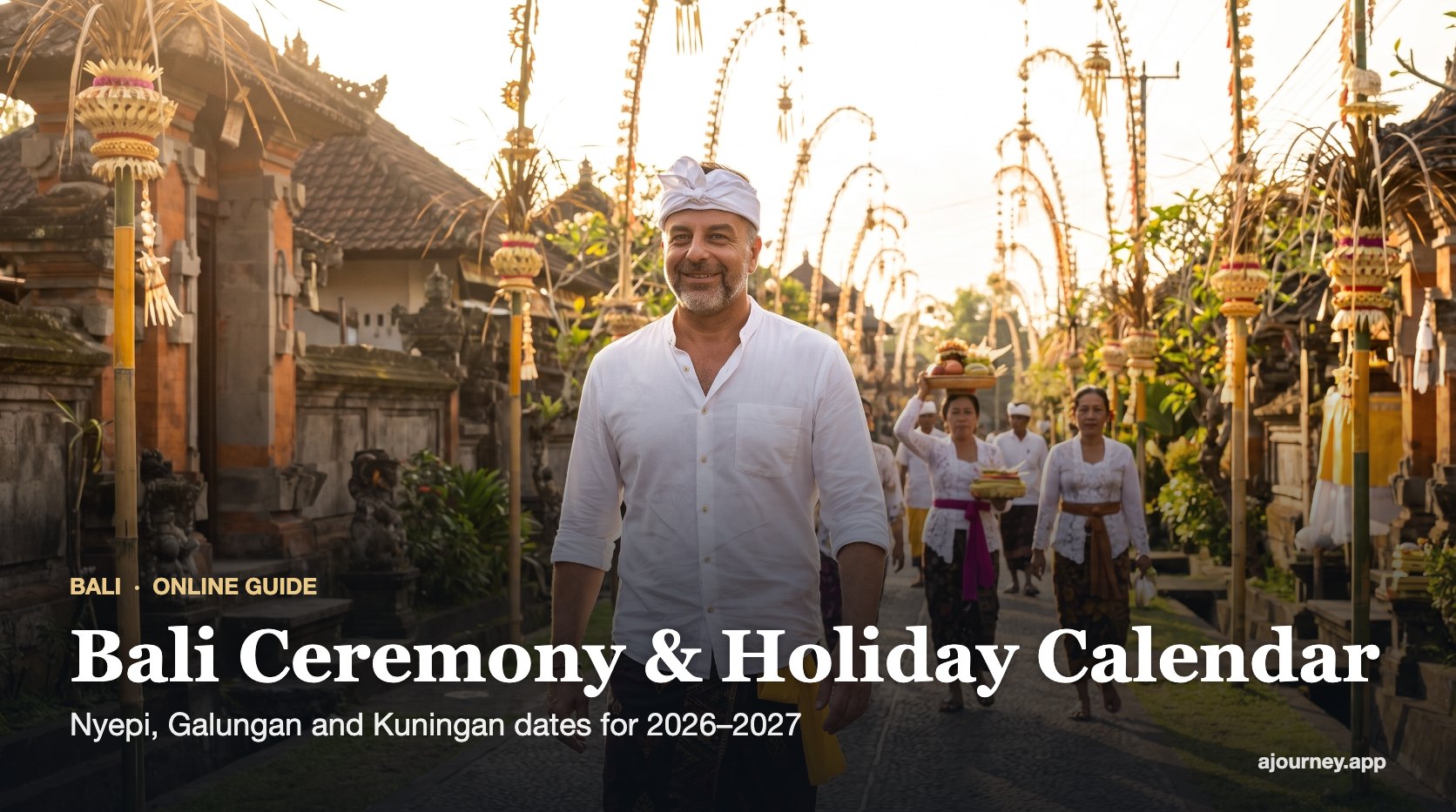
One of the most magical things about living in Bali is that the calendar never feels ordinary. One week the streets are lined with tall, curved bamboo poles swaying in the wind. A few months later the whole island goes completely silent for 24 hours—no cars, no lights, not even the airport. And almost every day, somewhere nearby, there is a temple ceremony with gamelan music and women carrying towers of fruit on their heads.
These celebrations are not shows for tourists—they are the heart of Balinese life. But if you know the dates, you can plan your trip around them, witness something unforgettable and avoid surprises. Here is my guide to the most important Balinese holidays and what they mean for your trip.
Key dates for your planning
- Saraswati: 31 October 2026 and 29 May 2027.
- Galungan: 13 January 2027 and 11 August 2027. Kuningan follows ten days later.
- Ogoh-ogoh parades: evening of 7 March 2027.
- Nyepi (Day of Silence): 8 March 2027—the airport closes and everyone must stay inside.
- Dates follow Balinese calendars and can be confirmed locally—always double-check before you book.
1. Why Bali Has Its Own Calendar
Balinese Hindus follow two calendars alongside the Western one. The Pawukon calendar repeats every 210 days, which is why Galungan and Kuningan happen roughly twice a year. The lunar Saka calendar sets Nyepi, the Balinese New Year. That is why the dates move every year in the Western calendar—and why I always check them before planning anything important.
2. Galungan and Kuningan: Bali at Its Most Beautiful
Galungan celebrates the victory of dharma (good) over adharma (evil), when ancestral spirits are believed to visit the earth. In the days before, families build penjor—tall bamboo poles decorated with woven palm leaves—outside every home. Driving through a village lined with penjor is one of the most beautiful sights in Bali.
Ten days later, Kuningan marks the moment the spirits return. Families pray, prepare special food and visit relatives.
What it means for your trip: villages are full of ceremonies and colour—a wonderful time to visit. Some local businesses and warungs close for a few days and staff go home to their villages, so service may be slower. Temples are busy with worshippers; visit respectfully, dress correctly and give people space.
3. Nyepi: The Day Bali Stands Still
Nyepi, the Balinese New Year, is unlike anything else in the world. From 6 a.m. on Nyepi until 6 a.m. the next day, the whole island observes silence: no travel, no work, no entertainment, and lights kept low. Ngurah Rai International Airport closes, roads are empty, and traditional village guards called pecalang make sure everyone respects the rules.
As a visitor, you must stay inside your hotel or villa. Most hotels keep basic services running quietly for guests. Prepare food and water in advance if you stay in a private villa, and expect mobile data to be restricted in some years.
Honestly? I find Nyepi beautiful. With no light pollution, the night sky over Bali is full of stars. It is a rare chance to simply be still.

4. Ogoh-Ogoh: The Night Before the Silence
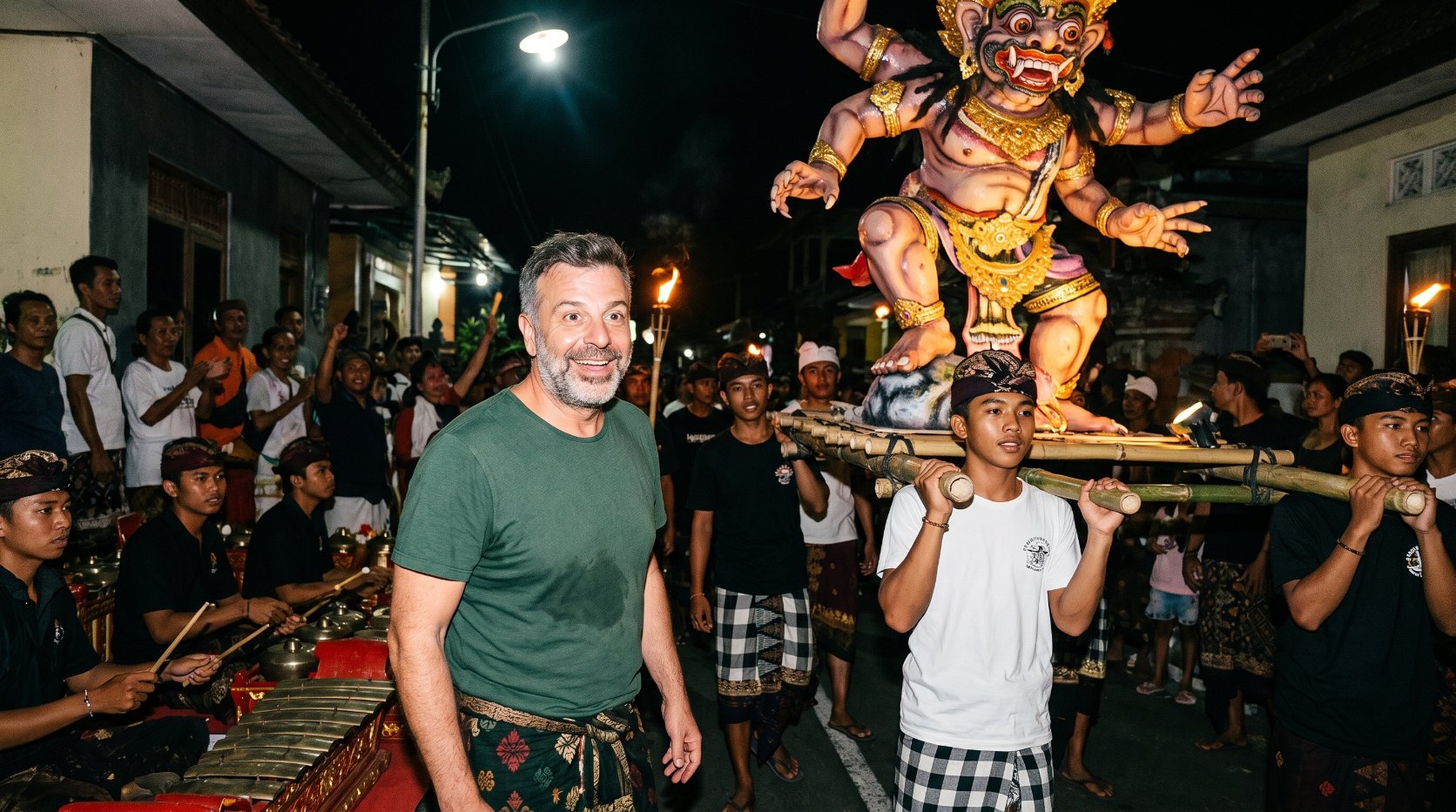
The evening before Nyepi is the opposite of silence. Villages parade enormous ogoh-ogoh—giant, often terrifying demon figures made by local youth groups—through the streets with gamelan music, torches and lots of energy. The figures represent negative forces that are symbolically driven away before the New Year. It is loud, joyful and spectacular.
My tip: watch the parade near your accommodation so you can get back easily, because roads close. Arrive early and keep a respectful distance from the procession.
5. Other Celebrations You May See
- Melasti – in the days before Nyepi, long processions carry sacred objects to the sea or springs for purification. Seeing a Melasti procession on the beach is unforgettable.
- Saraswati – the day honouring the goddess of knowledge, when books and learning are blessed. Students wear traditional dress and make offerings.
- Pagerwesi – four days after Saraswati, focused on spiritual strength.
- Odalan – every temple celebrates its own anniversary every 210 days. With thousands of temples, there is almost always an odalan somewhere.
- Tumpek days – special days to honour animals, plants, tools and more.
6. Balinese Holiday Dates 2026–2027
| Celebration | Date |
|---|---|
| Saraswati | 31 October 2026 |
| Pagerwesi | 4 November 2026 |
| Galungan | 13 January 2027 |
| Kuningan | 23 January 2027 |
| Ogoh-ogoh parades | 7 March 2027 (evening) |
| Nyepi – Day of Silence | 8 March 2027 |
| Saraswati | 29 May 2027 |
| Pagerwesi | 2 June 2027 |
| Galungan | 11 August 2027 |
| Kuningan | 21 August 2027 |
Dates are based on current Balinese calendars. Local practices and ceremony times can vary, so confirm with your accommodation or the official Bali tourism sources before planning.
7. How These Holidays Affect Your Trip
- Flights: no flights arrive or depart on Nyepi. Avoid booking your arrival or departure for that day.
- Traffic: processions can close roads for a while—be patient and allow extra time.
- Prices: hotels may run Nyepi packages; Galungan does not usually change prices much.
- Services: some drivers, guides and small businesses take a few days off around Galungan and Kuningan.
- Experiences: these are the days when you see Bali at its most authentic.
8. How to Join Respectfully
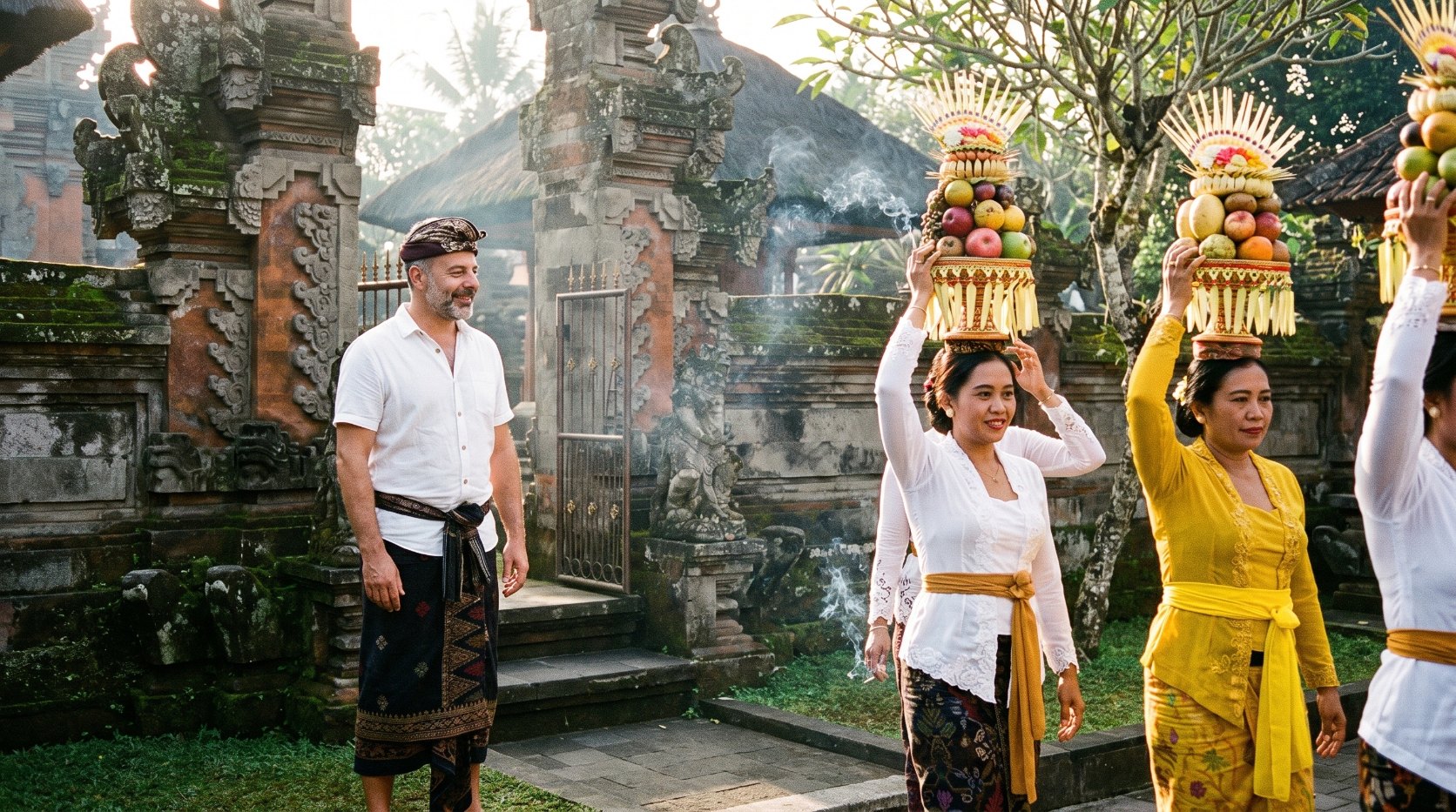
- Wear a sarong and sash when entering temples; cover shoulders and knees.
- Never walk in front of people who are praying, and don’t stand higher than the priest.
- Ask before taking photos of people—never use flash during prayers.
- Don’t step on offerings on the ground.
- If a local invites you to join, follow their guidance with humility.
I explain temple etiquette and offerings in detail in my Culture & Etiquette in Bali guide.
Frequently Asked Questions
When is Nyepi 2027?
Nyepi 2027 falls on 8 March. The silence lasts 24 hours from 6 a.m., and the ogoh-ogoh parades take place the evening before, on 7 March.
Is Bali airport closed on Nyepi?
Yes. Ngurah Rai International Airport closes for the 24 hours of Nyepi, so no flights arrive or depart.
When is Galungan in 2027?
Galungan falls on 13 January and 11 August 2027, with Kuningan ten days later on 23 January and 21 August.
Is it a good idea to visit Bali during Galungan?
Yes. Villages are decorated with penjor and full of ceremonies. Some small businesses may close for a few days, so plan with flexibility.
Can tourists join Balinese ceremonies?
You may watch respectfully, and sometimes you will be invited to join. Wear a sarong and sash at temples, don’t walk in front of people praying and ask before taking photos.
Related Bali Guides
- Culture & Etiquette in Bali
- Bali Climate & Weather
- How to Plan Your Bali Itinerary
- Flights to Bali
- Where to Stay in Bali
- Safety in Bali
Follow my Bali life day by day
I share the places, people and little discoveries behind these guides on our Instagram. Say hello and follow us at @ajourney for my real experiences in Bali.
Sources and Further Reading
Holiday dates are based on published Balinese calendars for 2026–2027, including the Bali Institute cultural calendar. Ceremony details can vary by village—please confirm locally.
Images are AI-created editorial illustrations using Emre Konuralp’s portrait reference where shown. They illustrate the guide rather than document a specific visit.
By Emre Konuralp · Updated October 2026
Every time I share a video of a ceremony or the silence of Nyepi on Instagram, my DMs fill with the same questions: “When is the next one?” “Can I see it?” “Will the airport be closed?” This calendar is my answer to all of you. Follow @ajourney to see these celebrations through my eyes as they happen.
One of the most magical things about living in Bali is that the calendar never feels ordinary. One week the streets are lined with tall, curved bamboo poles swaying in the wind. A few months later the whole island goes completely silent for 24 hours—no cars, no lights, not even the airport. And almost every day, somewhere nearby, there is a temple ceremony with gamelan music and women carrying towers of fruit on their heads.
These celebrations are not shows for tourists—they are the heart of Balinese life. But if you know the dates, you can plan your trip around them, witness something unforgettable and avoid surprises. Here is my guide to the most important Balinese holidays and what they mean for your trip.
Key dates for your planning
- Saraswati: 31 October 2026 and 29 May 2027.
- Galungan: 13 January 2027 and 11 August 2027. Kuningan follows ten days later.
- Ogoh-ogoh parades: evening of 7 March 2027.
- Nyepi (Day of Silence): 8 March 2027—the airport closes and everyone must stay inside.
- Dates follow Balinese calendars and can be confirmed locally—always double-check before you book.
1. Why Bali Has Its Own Calendar
Balinese Hindus follow two calendars alongside the Western one. The Pawukon calendar repeats every 210 days, which is why Galungan and Kuningan happen roughly twice a year. The lunar Saka calendar sets Nyepi, the Balinese New Year. That is why the dates move every year in the Western calendar—and why I always check them before planning anything important.
2. Galungan and Kuningan: Bali at Its Most Beautiful
Galungan celebrates the victory of dharma (good) over adharma (evil), when ancestral spirits are believed to visit the earth. In the days before, families build penjor—tall bamboo poles decorated with woven palm leaves—outside every home. Driving through a village lined with penjor is one of the most beautiful sights in Bali.
Ten days later, Kuningan marks the moment the spirits return. Families pray, prepare special food and visit relatives.
What it means for your trip: villages are full of ceremonies and colour—a wonderful time to visit. Some local businesses and warungs close for a few days and staff go home to their villages, so service may be slower. Temples are busy with worshippers; visit respectfully, dress correctly and give people space.
3. Nyepi: The Day Bali Stands Still
Nyepi, the Balinese New Year, is unlike anything else in the world. From 6 a.m. on Nyepi until 6 a.m. the next day, the whole island observes silence: no travel, no work, no entertainment, and lights kept low. Ngurah Rai International Airport closes, roads are empty, and traditional village guards called pecalang make sure everyone respects the rules.
As a visitor, you must stay inside your hotel or villa. Most hotels keep basic services running quietly for guests. Prepare food and water in advance if you stay in a private villa, and expect mobile data to be restricted in some years.
Honestly? I find Nyepi beautiful. With no light pollution, the night sky over Bali is full of stars. It is a rare chance to simply be still.
4. Ogoh-Ogoh: The Night Before the Silence
The evening before Nyepi is the opposite of silence. Villages parade enormous ogoh-ogoh—giant, often terrifying demon figures made by local youth groups—through the streets with gamelan music, torches and lots of energy. The figures represent negative forces that are symbolically driven away before the New Year. It is loud, joyful and spectacular.
My tip: watch the parade near your accommodation so you can get back easily, because roads close. Arrive early and keep a respectful distance from the procession.
5. Other Celebrations You May See
- Melasti – in the days before Nyepi, long processions carry sacred objects to the sea or springs for purification. Seeing a Melasti procession on the beach is unforgettable.
- Saraswati – the day honouring the goddess of knowledge, when books and learning are blessed. Students wear traditional dress and make offerings.
- Pagerwesi – four days after Saraswati, focused on spiritual strength.
- Odalan – every temple celebrates its own anniversary every 210 days. With thousands of temples, there is almost always an odalan somewhere.
- Tumpek days – special days to honour animals, plants, tools and more.
6. Balinese Holiday Dates 2026–2027
| Celebration | Date |
|---|---|
| Saraswati | 31 October 2026 |
| Pagerwesi | 4 November 2026 |
| Galungan | 13 January 2027 |
| Kuningan | 23 January 2027 |
| Ogoh-ogoh parades | 7 March 2027 (evening) |
| Nyepi – Day of Silence | 8 March 2027 |
| Saraswati | 29 May 2027 |
| Pagerwesi | 2 June 2027 |
| Galungan | 11 August 2027 |
| Kuningan | 21 August 2027 |
Dates are based on current Balinese calendars. Local practices and ceremony times can vary, so confirm with your accommodation or the official Bali tourism sources before planning.
7. How These Holidays Affect Your Trip
- Flights: no flights arrive or depart on Nyepi. Avoid booking your arrival or departure for that day.
- Traffic: processions can close roads for a while—be patient and allow extra time.
- Prices: hotels may run Nyepi packages; Galungan does not usually change prices much.
- Services: some drivers, guides and small businesses take a few days off around Galungan and Kuningan.
- Experiences: these are the days when you see Bali at its most authentic.
8. How to Join Respectfully
- Wear a sarong and sash when entering temples; cover shoulders and knees.
- Never walk in front of people who are praying, and don’t stand higher than the priest.
- Ask before taking photos of people—never use flash during prayers.
- Don’t step on offerings on the ground.
- If a local invites you to join, follow their guidance with humility.
I explain temple etiquette and offerings in detail in my Culture & Etiquette in Bali guide.
Frequently Asked Questions
When is Nyepi 2027?
Nyepi 2027 falls on 8 March. The silence lasts 24 hours from 6 a.m., and the ogoh-ogoh parades take place the evening before, on 7 March.
Is Bali airport closed on Nyepi?
Yes. Ngurah Rai International Airport closes for the 24 hours of Nyepi, so no flights arrive or depart.
When is Galungan in 2027?
Galungan falls on 13 January and 11 August 2027, with Kuningan ten days later on 23 January and 21 August.
Is it a good idea to visit Bali during Galungan?
Yes. Villages are decorated with penjor and full of ceremonies. Some small businesses may close for a few days, so plan with flexibility.
Can tourists join Balinese ceremonies?
You may watch respectfully, and sometimes you will be invited to join. Wear a sarong and sash at temples, don’t walk in front of people praying and ask before taking photos.
Related Bali Guides
- Culture & Etiquette in Bali
- Bali Climate & Weather
- How to Plan Your Bali Itinerary
- Flights to Bali
- Where to Stay in Bali
- Safety in Bali
Follow my Bali life day by day
I share the places, people and little discoveries behind these guides on our Instagram. Say hello and follow us at @ajourney for my real experiences in Bali.
Sources and Further Reading
Holiday dates are based on published Balinese calendars for 2026–2027, including the Bali Institute cultural calendar. Ceremony details can vary by village—please confirm locally.
Images are AI-created editorial illustrations using Emre Konuralp’s portrait reference where shown. They illustrate the guide rather than document a specific visit.