

By Emre Konuralp · Updated October 2026
“Do I really need travel insurance for Bali?” I see this question in my Instagram messages all the time—and sadly, I also hear from followers who learned the answer the hard way. This guide is what I wish everyone read before booking. Questions about your own situation? Write to me at @ajourney.
I will be very honest with you: travel insurance is the least exciting part of planning a Bali trip—and one of the most important. In Bali I have seen what happens when travellers skip it: a scooter fall on a gravel road, a bad stomach infection that needs a drip, a twisted ankle on the way down to a beach. Private clinics in Bali are good, but they are not cheap, and serious cases sometimes need a transfer to another country.
This guide explains what a good policy for Bali should cover, the exclusions that catch people out—especially with scooters—and how I check a policy before I buy it. I am not an insurance broker, so always read your own policy wording carefully.
What your Bali insurance should include
- Emergency medical treatment and hospital stays with a high limit.
- Medical evacuation and repatriation—this is where the biggest costs are.
- Scooter / motorbike cover, if you plan to ride, and the licence conditions that come with it.
- Adventure activities you plan: surfing, diving, hiking Mount Batur, rafting.
- Trip cancellation, delay, baggage and personal liability.
1. Why I Never Travel to Bali Without Insurance
Most trips go perfectly. Insurance is for the day that doesn’t. In Bali the most common problems I hear about are road accidents, stomach infections, dengue fever, infected cuts and coral scratches, and injuries from surfing or slippery waterfall paths. Treatment at an international-standard private hospital can quickly reach thousands of dollars, and an air evacuation can cost far more.
Some visa types—for example longer-stay visas—may also ask for proof of health insurance. Check the requirements in my Bali Visa & Entry Guide.
2. Medical Cover and Evacuation

Look for a high limit for emergency medical expenses and make sure medical evacuation and repatriation are included. Also check:
- Whether the insurer can pay the hospital directly or you must pay first and claim later.
- A 24/7 emergency assistance phone number—save it in your phone and send it to a travel companion.
- Cover for pre-existing conditions, if you have any, declared honestly.
- Cover for outpatient visits and medication, not just hospital stays.
3. Scooters: The Exclusion That Catches Everyone
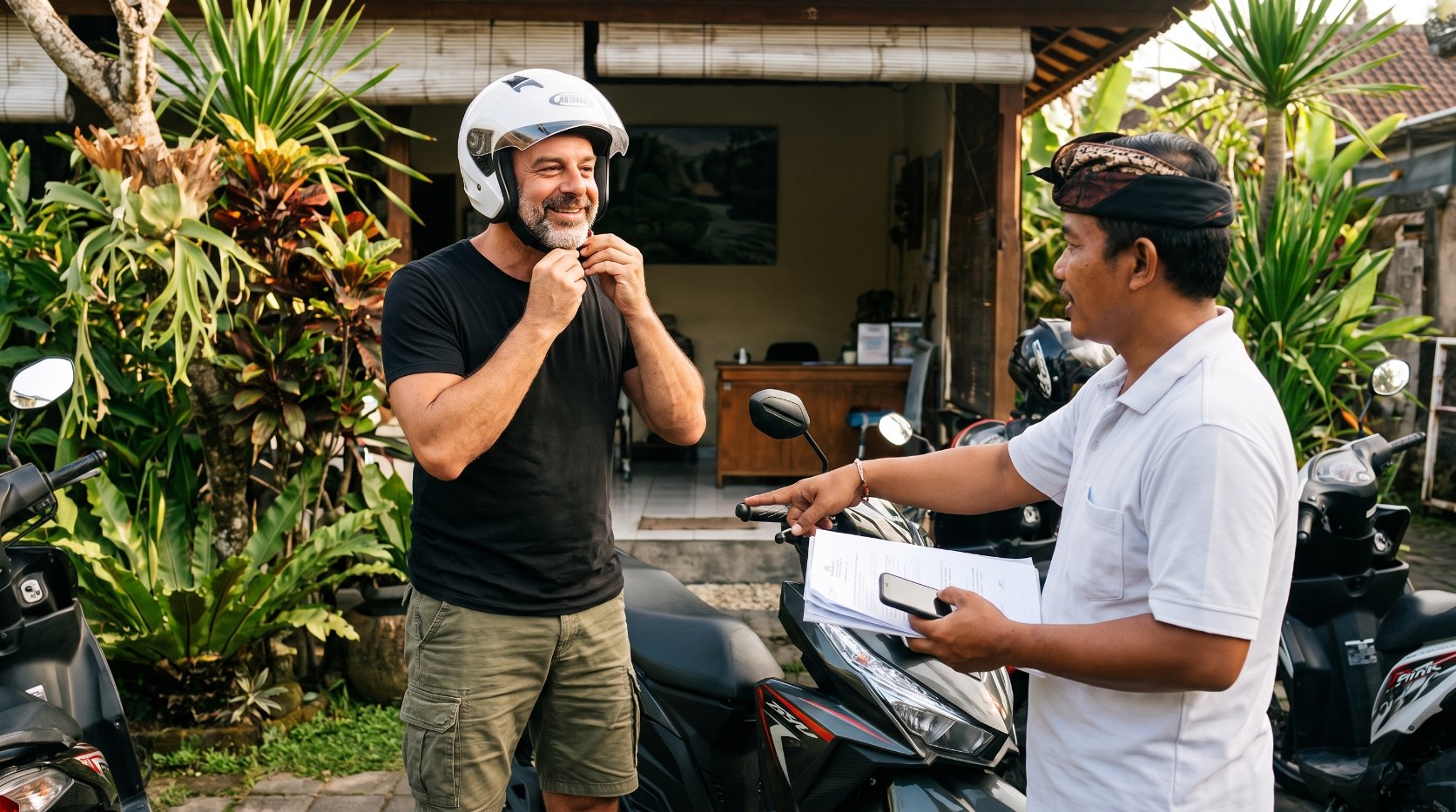
This is the most important section in this guide. Many travellers rent a scooter in Bali assuming they are insured—and only discover after an accident that they are not.
Most policies only cover motorbike or scooter riding if you meet all of their conditions, which commonly include:
- A valid motorcycle licence from your home country (a car licence is usually not enough).
- A valid International Driving Permit that includes the motorcycle category, obtained from your home country’s official issuing body.
- Wearing a helmet, as driver and passenger.
- Not being under the influence of alcohol or drugs.
- Sometimes an engine-size limit, and sometimes an extra premium for motorbike cover.
If you don’t meet these conditions, my honest advice is simple: don’t ride—use Gojek, Grab or a driver. I explain all the options in my Getting Around Bali guide.
4. Activities: Surfing, Diving, Volcano Hikes
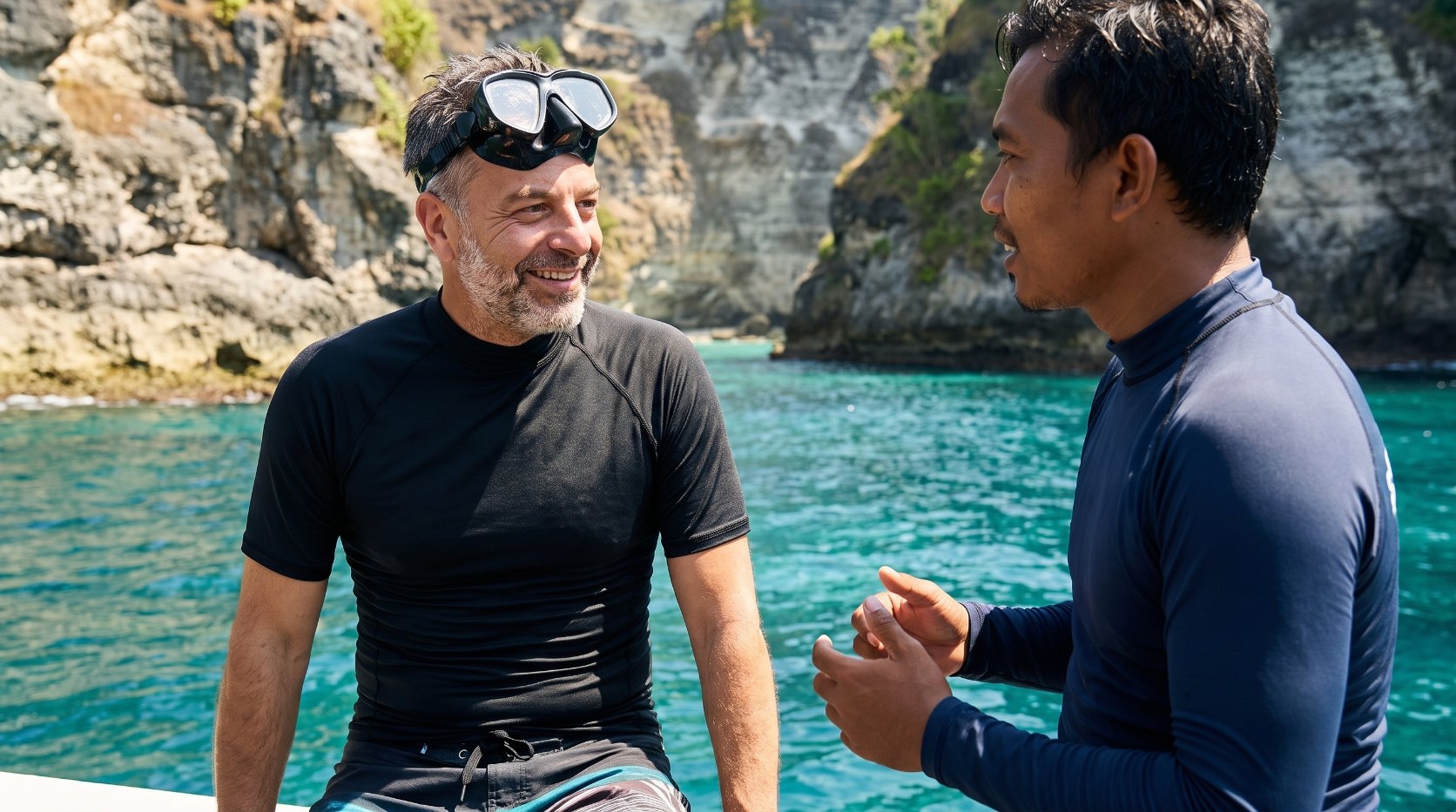
Bali is an adventure playground, and standard policies often exclude some activities or limit them. Check your policy if you plan to:
- Scuba dive—check the maximum depth covered and whether you need a certification.
- Surf, especially at advanced reef breaks.
- Hike Mount Batur or Mount Agung—altitude limits rarely matter here, but guided hikes are usually required.
- White-water rafting, canyoning, quad biking or paragliding.
5. Trip Cancellation, Delays and Belongings
Volcanic ash clouds, Nyepi airport closures, flight delays and lost luggage are real possibilities. Good cover for cancellation, delay, missed connections and baggage can save you a lot of money. If you travel with expensive cameras or laptops, check the single-item limit.
6. My Checklist Before I Buy a Policy
- Is the medical limit high and is evacuation included?
- Are scooters covered—and do I meet every condition?
- Are my planned activities included?
- Does it cover the whole trip, including travel days?
- What is the excess (deductible) per claim?
- Is there a 24/7 assistance line, and does it handle direct payment to hospitals?
- For long stays: can I buy or extend cover while already abroad?
7. If Something Happens in Bali
- Get to safety and medical help first. Emergency numbers in Indonesia: 112 general emergency, 119 medical emergency, 110 police.
- Call your insurer’s emergency line as early as possible, especially before major treatment.
- Keep every receipt, medical report and prescription.
- For theft, ask for a police report—most insurers require it.
- Take photos and write down what happened while it is fresh.
Health tips for staying well in the first place are in my Health in Bali guide, and general advice is in my Safety in Bali guide.
8. My Honest Advice
Buy your insurance when you book your flights, so cancellation cover starts immediately. Choose a policy for the trip you will really have—with the scooter, the surf lesson and the diving—not for an imaginary trip spent by the pool. Then forget about it and enjoy Bali.
Frequently Asked Questions
Do I need travel insurance for Bali?
It is not required for every visa, but I strongly recommend it. Private medical care and medical evacuation can be very expensive.
Does travel insurance cover scooter accidents in Bali?
Only if you meet the policy’s conditions—usually a valid motorcycle licence, an International Driving Permit with the motorcycle category and wearing a helmet. Otherwise claims may be refused.
Is diving covered by travel insurance?
Often only to a certain depth or with an add-on. Check the maximum depth and certification requirements before you dive.
What emergency numbers should I know in Bali?
112 for general emergencies, 119 for medical emergencies and 110 for the police. Also save your insurer’s 24/7 assistance number.
When should I buy travel insurance for Bali?
As soon as you book your flights, so trip cancellation cover starts immediately.
Related Bali Guides
- Bali Visa & Entry Guide
- Safety in Bali
- How Much Does a Trip to Bali Cost?
- What to Pack for Bali
- Flights to Bali
- Wildlife & Animals in Bali
Follow my Bali life day by day
I share the places, people and little discoveries behind these guides on our Instagram. Say hello and follow us at @ajourney for my real experiences in Bali.
Images are AI-created editorial illustrations using Emre Konuralp’s portrait reference where shown. They illustrate the guide rather than document a specific visit.
By Emre Konuralp · Updated October 2026
“Do I really need travel insurance for Bali?” I see this question in my Instagram messages all the time—and sadly, I also hear from followers who learned the answer the hard way. This guide is what I wish everyone read before booking. Questions about your own situation? Write to me at @ajourney.
I will be very honest with you: travel insurance is the least exciting part of planning a Bali trip—and one of the most important. In Bali I have seen what happens when travellers skip it: a scooter fall on a gravel road, a bad stomach infection that needs a drip, a twisted ankle on the way down to a beach. Private clinics in Bali are good, but they are not cheap, and serious cases sometimes need a transfer to another country.
This guide explains what a good policy for Bali should cover, the exclusions that catch people out—especially with scooters—and how I check a policy before I buy it. I am not an insurance broker, so always read your own policy wording carefully.
What your Bali insurance should include
- Emergency medical treatment and hospital stays with a high limit.
- Medical evacuation and repatriation—this is where the biggest costs are.
- Scooter / motorbike cover, if you plan to ride, and the licence conditions that come with it.
- Adventure activities you plan: surfing, diving, hiking Mount Batur, rafting.
- Trip cancellation, delay, baggage and personal liability.
1. Why I Never Travel to Bali Without Insurance
Most trips go perfectly. Insurance is for the day that doesn’t. In Bali the most common problems I hear about are road accidents, stomach infections, dengue fever, infected cuts and coral scratches, and injuries from surfing or slippery waterfall paths. Treatment at an international-standard private hospital can quickly reach thousands of dollars, and an air evacuation can cost far more.
Some visa types—for example longer-stay visas—may also ask for proof of health insurance. Check the requirements in my Bali Visa & Entry Guide.
2. Medical Cover and Evacuation
Look for a high limit for emergency medical expenses and make sure medical evacuation and repatriation are included. Also check:
- Whether the insurer can pay the hospital directly or you must pay first and claim later.
- A 24/7 emergency assistance phone number—save it in your phone and send it to a travel companion.
- Cover for pre-existing conditions, if you have any, declared honestly.
- Cover for outpatient visits and medication, not just hospital stays.
3. Scooters: The Exclusion That Catches Everyone
This is the most important section in this guide. Many travellers rent a scooter in Bali assuming they are insured—and only discover after an accident that they are not.
Most policies only cover motorbike or scooter riding if you meet all of their conditions, which commonly include:
- A valid motorcycle licence from your home country (a car licence is usually not enough).
- A valid International Driving Permit that includes the motorcycle category, obtained from your home country’s official issuing body.
- Wearing a helmet, as driver and passenger.
- Not being under the influence of alcohol or drugs.
- Sometimes an engine-size limit, and sometimes an extra premium for motorbike cover.
If you don’t meet these conditions, my honest advice is simple: don’t ride—use Gojek, Grab or a driver. I explain all the options in my Getting Around Bali guide.
4. Activities: Surfing, Diving, Volcano Hikes
Bali is an adventure playground, and standard policies often exclude some activities or limit them. Check your policy if you plan to:
- Scuba dive—check the maximum depth covered and whether you need a certification.
- Surf, especially at advanced reef breaks.
- Hike Mount Batur or Mount Agung—altitude limits rarely matter here, but guided hikes are usually required.
- White-water rafting, canyoning, quad biking or paragliding.
5. Trip Cancellation, Delays and Belongings
Volcanic ash clouds, Nyepi airport closures, flight delays and lost luggage are real possibilities. Good cover for cancellation, delay, missed connections and baggage can save you a lot of money. If you travel with expensive cameras or laptops, check the single-item limit.
6. My Checklist Before I Buy a Policy
- Is the medical limit high and is evacuation included?
- Are scooters covered—and do I meet every condition?
- Are my planned activities included?
- Does it cover the whole trip, including travel days?
- What is the excess (deductible) per claim?
- Is there a 24/7 assistance line, and does it handle direct payment to hospitals?
- For long stays: can I buy or extend cover while already abroad?
7. If Something Happens in Bali
- Get to safety and medical help first. Emergency numbers in Indonesia: 112 general emergency, 119 medical emergency, 110 police.
- Call your insurer’s emergency line as early as possible, especially before major treatment.
- Keep every receipt, medical report and prescription.
- For theft, ask for a police report—most insurers require it.
- Take photos and write down what happened while it is fresh.
Health tips for staying well in the first place are in my Health in Bali guide, and general advice is in my Safety in Bali guide.
8. My Honest Advice
Buy your insurance when you book your flights, so cancellation cover starts immediately. Choose a policy for the trip you will really have—with the scooter, the surf lesson and the diving—not for an imaginary trip spent by the pool. Then forget about it and enjoy Bali.
Frequently Asked Questions
Do I need travel insurance for Bali?
It is not required for every visa, but I strongly recommend it. Private medical care and medical evacuation can be very expensive.
Does travel insurance cover scooter accidents in Bali?
Only if you meet the policy’s conditions—usually a valid motorcycle licence, an International Driving Permit with the motorcycle category and wearing a helmet. Otherwise claims may be refused.
Is diving covered by travel insurance?
Often only to a certain depth or with an add-on. Check the maximum depth and certification requirements before you dive.
What emergency numbers should I know in Bali?
112 for general emergencies, 119 for medical emergencies and 110 for the police. Also save your insurer’s 24/7 assistance number.
When should I buy travel insurance for Bali?
As soon as you book your flights, so trip cancellation cover starts immediately.
Related Bali Guides
- Bali Visa & Entry Guide
- Safety in Bali
- How Much Does a Trip to Bali Cost?
- What to Pack for Bali
- Flights to Bali
- Wildlife & Animals in Bali
Follow my Bali life day by day
I share the places, people and little discoveries behind these guides on our Instagram. Say hello and follow us at @ajourney for my real experiences in Bali.
Images are AI-created editorial illustrations using Emre Konuralp’s portrait reference where shown. They illustrate the guide rather than document a specific visit.