


By Emre Konuralp · Updated October 2026
Some of the most beautiful messages I receive on Instagram come after I share a temple visit or a ceremony: “How can I visit respectfully?” “What should I wear?” I love that so many of you care about this. This guide is my answer, written from my life in Ubud. Follow @ajourney to experience Balinese culture with me.
I live in Ubud, and culture is one of the reasons I want travellers to look beyond Bali’s beaches, cafés and beautiful accommodation. The island’s spiritual life deserves attention of its own. A temple, a family courtyard or a ceremony can carry a meaning that is easy to miss when you are focused on your itinerary.
My approach is simple: arrive with curiosity, ask before joining in, and let the people responsible for a place explain its boundaries. You do not need to know every tradition before you travel. A willingness to listen is a good place to begin.
This guide brings together practical cultural advice for visiting Bali respectfully. Customs and access rules differ between temples and communities, so local instructions always take priority.
The Essentials Before You Go
- Cover your shoulders and knees at temples; wear the required sarong and sash.
- Stay within areas open to visitors and give people space to pray.
- Watch for flower offerings on paths and beside doorways.
- Ask before photographing people or joining a ritual.
- Use your right hand when giving or receiving something, where practical.
- Keep your voice calm and dress appropriately away from the beach.
- Check whether Nyepi falls during your trip and follow your accommodation’s guidance.
Understanding the Culture Behind the Customs
Balinese Hindu traditions have a strong presence in the island’s cultural life, although Bali is also home to people of other faiths and backgrounds. Avoid assuming everyone you meet shares the same beliefs or follows the same customs.
One useful introduction is Tri Hita Karana: harmony between people and the divine, between people themselves, and between people and nature. This philosophy also informs the subak irrigation system, connecting community cooperation, agriculture and water temples.
For my travels, I use that idea as a reminder to consider three questions: am I respecting this place, the people here and the environment? It makes cultural etiquette easier to put into practice.
Temple Etiquette: Dress and Behaviour
Wear a top that covers your shoulders and clothing that covers your knees. A sarong and waist sash are commonly required; check what the temple provides or rents before arriving. This applies to men as well as women. A sarong does not replace an appropriate shirt.
Speak softly, follow temple staff and avoid interrupting worship. Carrying an entrance ticket does not give you access to every courtyard. If a gate is closed or an area is reserved for prayer, wait for clear permission.
I would pack a lightweight shirt and ask staff to help with the sarong if needed. That small preparation makes a temple visit more comfortable.
Menstruation and Other Entry Restrictions
Many temples restrict entry during menstruation; the official visitor information for Gunung Kawi specifically states this requirement. Other restrictions may apply at individual sites. Check posted guidance and ask temple staff privately if you are uncertain. These are religious access customs, rather than medical claims.
Canang Sari: Treat Offerings with Care
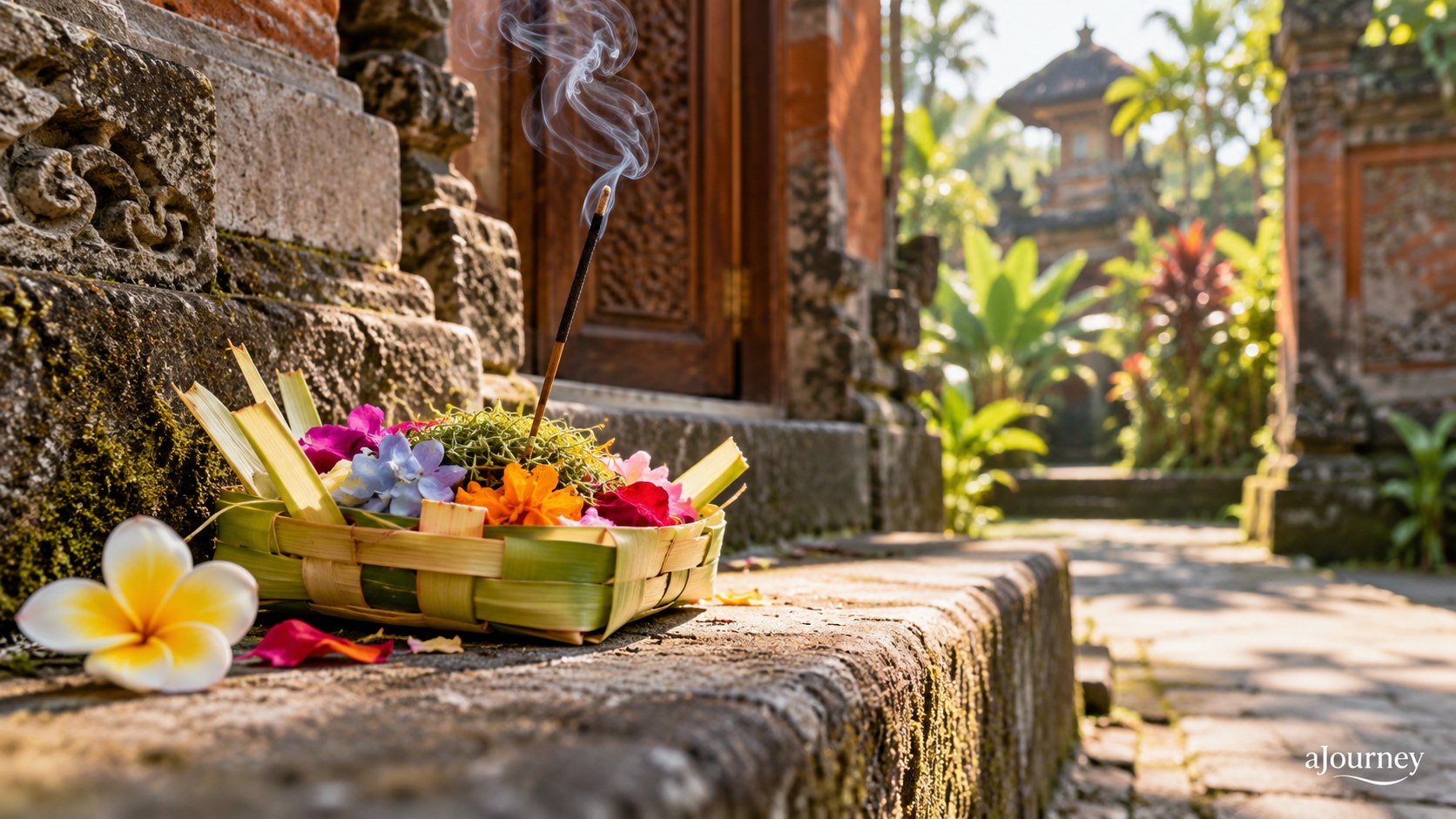
The small palm-leaf trays containing flowers that you see around Bali are often canang sari, part of daily religious offering practices. They may sit near a shop entrance, a family shrine or the edge of a walkway.
Watch where you step and leave offerings in place. Do not pick one up for a photo or move it out of your way. If you accidentally disturb one, acknowledge it politely and ask the person nearby what to do. You do not need to panic or invent a ritual to correct the mistake.
Everyday Courtesy: Small Gestures Matter
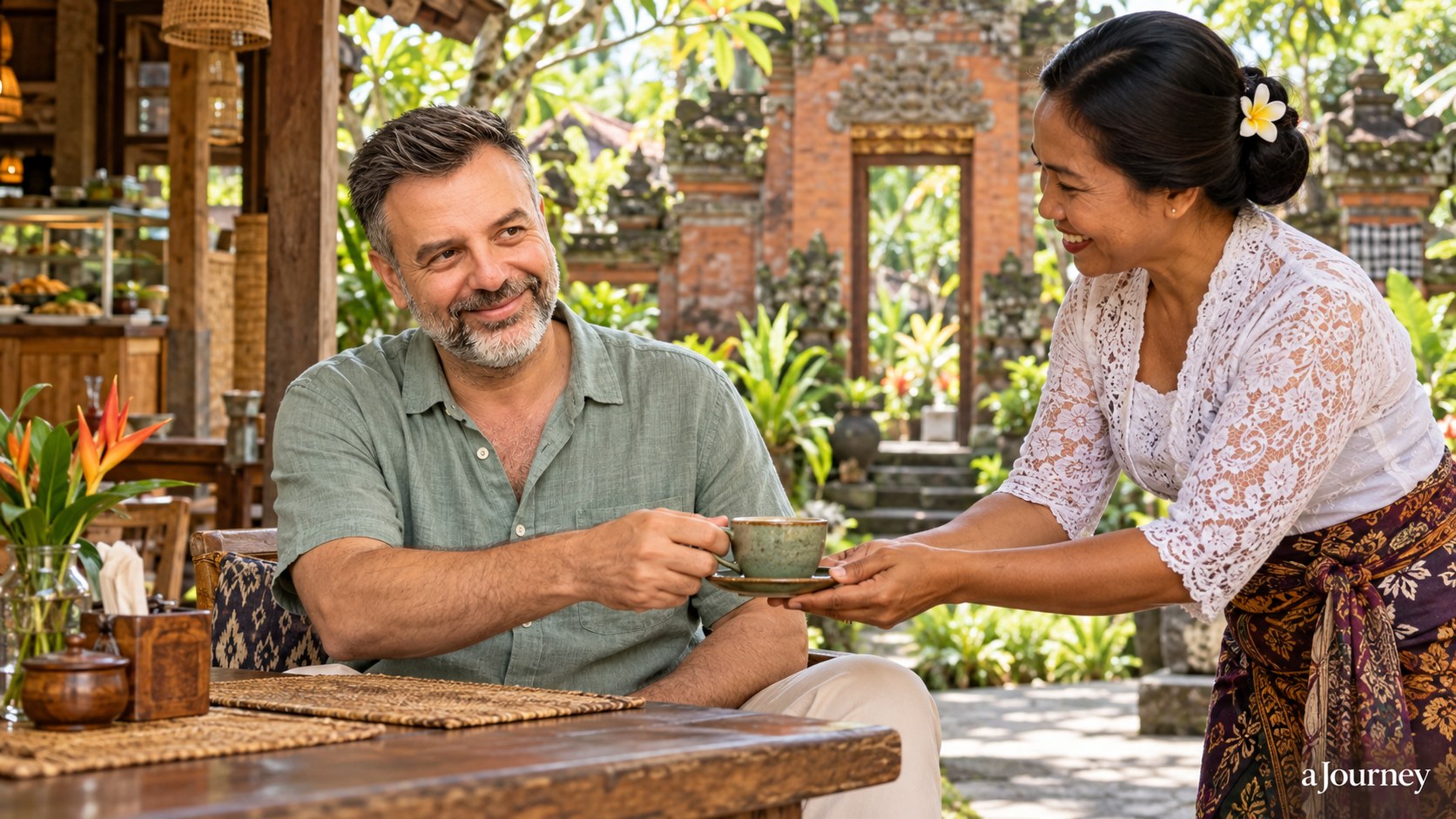
Use your right hand when handing over money, accepting an item or offering something, where practical. Using both hands can also be a considerate choice when an object needs support. If you have a disability or an injury, there is no need to force an uncomfortable movement.
Avoid touching someone’s head, including a child’s. A friendly intention does not automatically make physical contact welcome. More generally, ask before touching people or their belongings.
When a misunderstanding happens, keep your voice steady. Explain what you need, check what was agreed and give the other person a chance to respond. Respectful communication also allows you to set a clear boundary or decline an offer.
A Few Useful Words
| Bahasa Indonesia | Meaning |
|---|---|
| Terima kasih | Thank you |
| Tolong | Please / help, depending on context |
| Permisi | Excuse me / may I pass? |
| Maaf | Sorry / excuse me |
| Selamat pagi | Good morning |
Bahasa Indonesia is the national language; Balinese is a distinct local language. You do not need a long vocabulary to begin a courteous interaction.
Photographs: Ask Before You Take the Shot
As a photographer, I would encourage you to consider the person before the picture. Ask before taking a close portrait, especially during worship or a private family event. For children, ask a parent or guardian as well as respecting the child’s response.
A ceremony visible from the road may still contain moments that a family wants to keep private. Stay out of the way, avoid flash during prayer, and put the camera down when asked. Permission to photograph someone does not automatically mean permission to use their portrait in advertising.
For temple architecture, follow the site’s photography rules. Do not climb a shrine, cross a barrier or move ceremonial objects to improve your composition. Ask about drone permissions separately; ordinary photography permission does not cover drone use.
Ceremonies and Processions: Give Them Space
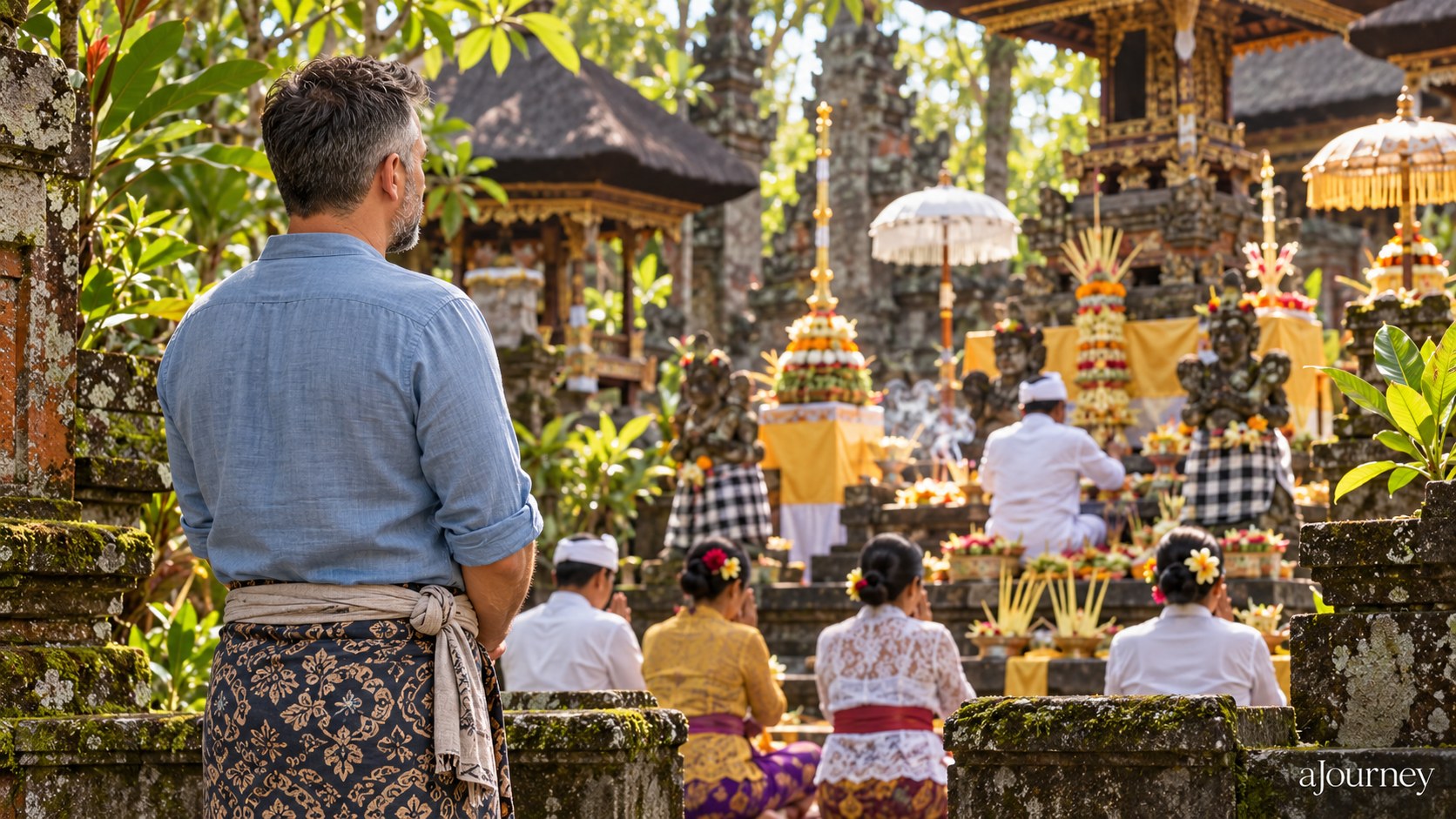
If you encounter a procession, slow down and follow the directions of the people managing the route. Allow extra time rather than trying to squeeze through participants. A ceremony is a meaningful event for the community.
Watch from an appropriate distance unless you are invited closer. Before joining, ask where you can stand or sit, whether you need different clothing and whether photography is welcome. For a cremation or another family ceremony, be particularly careful about privacy and tone.
I recommend leaving room in your travel plans for these moments. A local guide can help explain what is happening and whether observing is appropriate.
Melukat: Join with Guidance and Intention
Melukat is a Balinese purification practice associated with sacred water. Some sites welcome visitors to participate, but the process and access conditions vary. Ask a knowledgeable local guide or temple attendant how to take part at that particular location.
Check the required clothing, whether a separate bathing sarong is needed and where belongings should be left. Let your guide explain the sequence and any fountains that should be skipped. Do not assume a routine seen online applies to every temple.
My advice is to keep your attention on the practice. Arrange photographs in a way that respects other participants and does not interrupt the ritual. You can approach it with sincerity without making claims about guaranteed healing or outcomes.
Nyepi: Prepare for Bali’s Day of Silence
Nyepi marks the Balinese Saka New Year through silence and reflection. Public movement and ordinary activity are restricted, and visitors must follow the arrangements in place at their accommodation. It is an important part of the island’s religious calendar.
The date changes each year. Before booking a trip around that period, confirm the date, transport arrangements and current official notices. Ask your hotel about meals, permitted activities within the property, lighting and available services. Do not plan a normal sightseeing day.
Prepare essentials beforehand and respect the quiet. If an urgent situation occurs, contact accommodation staff so they can help through the appropriate local arrangements.
Homes, Villages and Dress Beyond the Beach
Put a shirt or cover-up on when you leave the beach for shops, village streets or places of worship. The atmosphere of a beach club does not determine what is appropriate in a family neighbourhood.
A beautiful doorway may be the entrance to someone’s home. Ask before entering a compound, even if other travellers appear to be walking in. An invitation to one area does not extend to bedrooms or a family shrine. Follow your host’s lead about shoes and where to sit.
In a village open to visitors, keep pathways clear and avoid treating residents’ daily routines as a performance. A friendly greeting and a question are better than assuming access.
Bargaining, Payments and Supporting Local People
Where bargaining is invited, keep it friendly. You can suggest a price, decline politely or walk away. In fixed-price businesses, respect the displayed price. Agree the cost and scope of a service before it begins.
Check your restaurant bill for any service charge before deciding on an additional tip. Give according to your budget and appreciation rather than assuming one tipping rule covers every business.
Choose local businesses because you value their work. A guide who explains a temple’s history, a craftsperson making an offering basket or a family preparing food brings knowledge and skill to your visit.
Respect for Nature Is Part of the Visit
Carry your rubbish out, stay on permitted paths and ask before entering cultivated land. Rice terraces are working fields, with crops, paths and irrigation channels that can be damaged by careless footsteps.
Leave sacred trees, shrines and ceremonial objects untouched. Take a reusable bottle and bag where practical, and follow the rules at beaches, waterfalls and protected sites. The view you came to enjoy depends on the place being cared for.
What If You Make a Mistake?
If someone corrects you, pause, listen and adjust. A simple apology is usually more useful than a long explanation of what you intended. Ask what you should do next.
You do not need to perform a culture perfectly to travel respectfully. My recommendation is to stay curious, prepare for temple visits and accept that the people responsible for a place decide its boundaries.
My Advice for a More Meaningful Bali Visit
Give yourself time to understand what you are seeing. Ask about the meaning of a ritual, listen to a local explanation and let some moments pass without taking a photograph.
For me, that is the most useful starting point for cultural travel: attention. Bring it to your conversations, the places you enter and the experiences you choose. It can make your journey through Bali much richer.
For more preparation, read my Bali Climate & Weather Guide and explore the Before You Go to Bali guides.
Sources and Local Guidance
Official Indonesia Travel resources consulted for this guide: temple dress and behaviour; Gunung Kawi entry customs; everyday cultural etiquette; Tri Hita Karana and subak; and Nyepi. Follow current notices and on-site instructions where these differ from general advice.
Images are AI-created editorial illustrations using Emre Konuralp’s reference photograph; they do not document specific visits or ceremonies.
Frequently Asked Questions
What should I wear to a temple in Bali?
Cover your shoulders and knees. A sarong and waist sash are usually required for men and women; many temples provide or rent them at the entrance.
What is canang sari and what if I step on one?
Canang sari are small palm-leaf offerings with flowers placed on paths, shrines and doorways. Watch where you step; if you accidentally touch one, a quiet apology is enough—do not move or tidy it yourself.
Can I take photos at Balinese ceremonies?
Ask before photographing people, especially during worship or private family events. Keep a respectful distance and follow any instructions from the people organising the ceremony.
What happens during Nyepi in Bali?
Nyepi is the Balinese Day of Silence. Movement and normal activities are restricted for about 24 hours, the airport closes and visitors must stay at their accommodation and follow its arrangements.
Is it rude to use your left hand in Bali?
Using your right hand to give or receive money and objects is considered more polite. If that is difficult for you, nobody expects perfection—courtesy and good intentions matter most.
Related Bali Guides
- Bali Airport Arrival Guide
- Bali Visa & Entry Guide
- Flights to Bali
- Bali SIM Card & Internet Guide
- Bali Money & Payments Guide
- What to Pack for Bali
- Bali Climate & Weather
- Safety in Bali
- Wildlife & Animals in Bali
- How to Plan Your Bali Itinerary
Follow my Bali life day by day
I share the places, people and little discoveries behind these guides on our Instagram. Say hello and follow us at @ajourney for my real experiences in Bali.
By Emre Konuralp · Updated October 2026
Some of the most beautiful messages I receive on Instagram come after I share a temple visit or a ceremony: “How can I visit respectfully?” “What should I wear?” I love that so many of you care about this. This guide is my answer, written from my life in Ubud. Follow @ajourney to experience Balinese culture with me.
I live in Ubud, and culture is one of the reasons I want travellers to look beyond Bali’s beaches, cafés and beautiful accommodation. The island’s spiritual life deserves attention of its own. A temple, a family courtyard or a ceremony can carry a meaning that is easy to miss when you are focused on your itinerary.
My approach is simple: arrive with curiosity, ask before joining in, and let the people responsible for a place explain its boundaries. You do not need to know every tradition before you travel. A willingness to listen is a good place to begin.
This guide brings together practical cultural advice for visiting Bali respectfully. Customs and access rules differ between temples and communities, so local instructions always take priority.
The Essentials Before You Go
- Cover your shoulders and knees at temples; wear the required sarong and sash.
- Stay within areas open to visitors and give people space to pray.
- Watch for flower offerings on paths and beside doorways.
- Ask before photographing people or joining a ritual.
- Use your right hand when giving or receiving something, where practical.
- Keep your voice calm and dress appropriately away from the beach.
- Check whether Nyepi falls during your trip and follow your accommodation’s guidance.
Understanding the Culture Behind the Customs
Balinese Hindu traditions have a strong presence in the island’s cultural life, although Bali is also home to people of other faiths and backgrounds. Avoid assuming everyone you meet shares the same beliefs or follows the same customs.
One useful introduction is Tri Hita Karana: harmony between people and the divine, between people themselves, and between people and nature. This philosophy also informs the subak irrigation system, connecting community cooperation, agriculture and water temples.
For my travels, I use that idea as a reminder to consider three questions: am I respecting this place, the people here and the environment? It makes cultural etiquette easier to put into practice.
Temple Etiquette: Dress and Behaviour
Wear a top that covers your shoulders and clothing that covers your knees. A sarong and waist sash are commonly required; check what the temple provides or rents before arriving. This applies to men as well as women. A sarong does not replace an appropriate shirt.
Speak softly, follow temple staff and avoid interrupting worship. Carrying an entrance ticket does not give you access to every courtyard. If a gate is closed or an area is reserved for prayer, wait for clear permission.
I would pack a lightweight shirt and ask staff to help with the sarong if needed. That small preparation makes a temple visit more comfortable.
Menstruation and Other Entry Restrictions
Many temples restrict entry during menstruation; the official visitor information for Gunung Kawi specifically states this requirement. Other restrictions may apply at individual sites. Check posted guidance and ask temple staff privately if you are uncertain. These are religious access customs, rather than medical claims.
Canang Sari: Treat Offerings with Care
The small palm-leaf trays containing flowers that you see around Bali are often canang sari, part of daily religious offering practices. They may sit near a shop entrance, a family shrine or the edge of a walkway.
Watch where you step and leave offerings in place. Do not pick one up for a photo or move it out of your way. If you accidentally disturb one, acknowledge it politely and ask the person nearby what to do. You do not need to panic or invent a ritual to correct the mistake.
Everyday Courtesy: Small Gestures Matter
Use your right hand when handing over money, accepting an item or offering something, where practical. Using both hands can also be a considerate choice when an object needs support. If you have a disability or an injury, there is no need to force an uncomfortable movement.
Avoid touching someone’s head, including a child’s. A friendly intention does not automatically make physical contact welcome. More generally, ask before touching people or their belongings.
When a misunderstanding happens, keep your voice steady. Explain what you need, check what was agreed and give the other person a chance to respond. Respectful communication also allows you to set a clear boundary or decline an offer.
A Few Useful Words
| Bahasa Indonesia | Meaning |
|---|---|
| Terima kasih | Thank you |
| Tolong | Please / help, depending on context |
| Permisi | Excuse me / may I pass? |
| Maaf | Sorry / excuse me |
| Selamat pagi | Good morning |
Bahasa Indonesia is the national language; Balinese is a distinct local language. You do not need a long vocabulary to begin a courteous interaction.
Photographs: Ask Before You Take the Shot
As a photographer, I would encourage you to consider the person before the picture. Ask before taking a close portrait, especially during worship or a private family event. For children, ask a parent or guardian as well as respecting the child’s response.
A ceremony visible from the road may still contain moments that a family wants to keep private. Stay out of the way, avoid flash during prayer, and put the camera down when asked. Permission to photograph someone does not automatically mean permission to use their portrait in advertising.
For temple architecture, follow the site’s photography rules. Do not climb a shrine, cross a barrier or move ceremonial objects to improve your composition. Ask about drone permissions separately; ordinary photography permission does not cover drone use.
Ceremonies and Processions: Give Them Space
If you encounter a procession, slow down and follow the directions of the people managing the route. Allow extra time rather than trying to squeeze through participants. A ceremony is a meaningful event for the community.
Watch from an appropriate distance unless you are invited closer. Before joining, ask where you can stand or sit, whether you need different clothing and whether photography is welcome. For a cremation or another family ceremony, be particularly careful about privacy and tone.
I recommend leaving room in your travel plans for these moments. A local guide can help explain what is happening and whether observing is appropriate.
Melukat: Join with Guidance and Intention
Melukat is a Balinese purification practice associated with sacred water. Some sites welcome visitors to participate, but the process and access conditions vary. Ask a knowledgeable local guide or temple attendant how to take part at that particular location.
Check the required clothing, whether a separate bathing sarong is needed and where belongings should be left. Let your guide explain the sequence and any fountains that should be skipped. Do not assume a routine seen online applies to every temple.
My advice is to keep your attention on the practice. Arrange photographs in a way that respects other participants and does not interrupt the ritual. You can approach it with sincerity without making claims about guaranteed healing or outcomes.
Nyepi: Prepare for Bali’s Day of Silence
Nyepi marks the Balinese Saka New Year through silence and reflection. Public movement and ordinary activity are restricted, and visitors must follow the arrangements in place at their accommodation. It is an important part of the island’s religious calendar.
The date changes each year. Before booking a trip around that period, confirm the date, transport arrangements and current official notices. Ask your hotel about meals, permitted activities within the property, lighting and available services. Do not plan a normal sightseeing day.
Prepare essentials beforehand and respect the quiet. If an urgent situation occurs, contact accommodation staff so they can help through the appropriate local arrangements.
Homes, Villages and Dress Beyond the Beach
Put a shirt or cover-up on when you leave the beach for shops, village streets or places of worship. The atmosphere of a beach club does not determine what is appropriate in a family neighbourhood.
A beautiful doorway may be the entrance to someone’s home. Ask before entering a compound, even if other travellers appear to be walking in. An invitation to one area does not extend to bedrooms or a family shrine. Follow your host’s lead about shoes and where to sit.
In a village open to visitors, keep pathways clear and avoid treating residents’ daily routines as a performance. A friendly greeting and a question are better than assuming access.
Bargaining, Payments and Supporting Local People
Where bargaining is invited, keep it friendly. You can suggest a price, decline politely or walk away. In fixed-price businesses, respect the displayed price. Agree the cost and scope of a service before it begins.
Check your restaurant bill for any service charge before deciding on an additional tip. Give according to your budget and appreciation rather than assuming one tipping rule covers every business.
Choose local businesses because you value their work. A guide who explains a temple’s history, a craftsperson making an offering basket or a family preparing food brings knowledge and skill to your visit.
Respect for Nature Is Part of the Visit
Carry your rubbish out, stay on permitted paths and ask before entering cultivated land. Rice terraces are working fields, with crops, paths and irrigation channels that can be damaged by careless footsteps.
Leave sacred trees, shrines and ceremonial objects untouched. Take a reusable bottle and bag where practical, and follow the rules at beaches, waterfalls and protected sites. The view you came to enjoy depends on the place being cared for.
What If You Make a Mistake?
If someone corrects you, pause, listen and adjust. A simple apology is usually more useful than a long explanation of what you intended. Ask what you should do next.
You do not need to perform a culture perfectly to travel respectfully. My recommendation is to stay curious, prepare for temple visits and accept that the people responsible for a place decide its boundaries.
My Advice for a More Meaningful Bali Visit
Give yourself time to understand what you are seeing. Ask about the meaning of a ritual, listen to a local explanation and let some moments pass without taking a photograph.
For me, that is the most useful starting point for cultural travel: attention. Bring it to your conversations, the places you enter and the experiences you choose. It can make your journey through Bali much richer.
For more preparation, read my Bali Climate & Weather Guide and explore the Before You Go to Bali guides.
Sources and Local Guidance
Official Indonesia Travel resources consulted for this guide: temple dress and behaviour; Gunung Kawi entry customs; everyday cultural etiquette; Tri Hita Karana and subak; and Nyepi. Follow current notices and on-site instructions where these differ from general advice.
Images are AI-created editorial illustrations using Emre Konuralp’s reference photograph; they do not document specific visits or ceremonies.
Frequently Asked Questions
What should I wear to a temple in Bali?
Cover your shoulders and knees. A sarong and waist sash are usually required for men and women; many temples provide or rent them at the entrance.
What is canang sari and what if I step on one?
Canang sari are small palm-leaf offerings with flowers placed on paths, shrines and doorways. Watch where you step; if you accidentally touch one, a quiet apology is enough—do not move or tidy it yourself.
Can I take photos at Balinese ceremonies?
Ask before photographing people, especially during worship or private family events. Keep a respectful distance and follow any instructions from the people organising the ceremony.
What happens during Nyepi in Bali?
Nyepi is the Balinese Day of Silence. Movement and normal activities are restricted for about 24 hours, the airport closes and visitors must stay at their accommodation and follow its arrangements.
Is it rude to use your left hand in Bali?
Using your right hand to give or receive money and objects is considered more polite. If that is difficult for you, nobody expects perfection—courtesy and good intentions matter most.
Related Bali Guides
- Bali Airport Arrival Guide
- Bali Visa & Entry Guide
- Flights to Bali
- Bali SIM Card & Internet Guide
- Bali Money & Payments Guide
- What to Pack for Bali
- Bali Climate & Weather
- Safety in Bali
- Wildlife & Animals in Bali
- How to Plan Your Bali Itinerary
Follow my Bali life day by day
I share the places, people and little discoveries behind these guides on our Instagram. Say hello and follow us at @ajourney for my real experiences in Bali.