

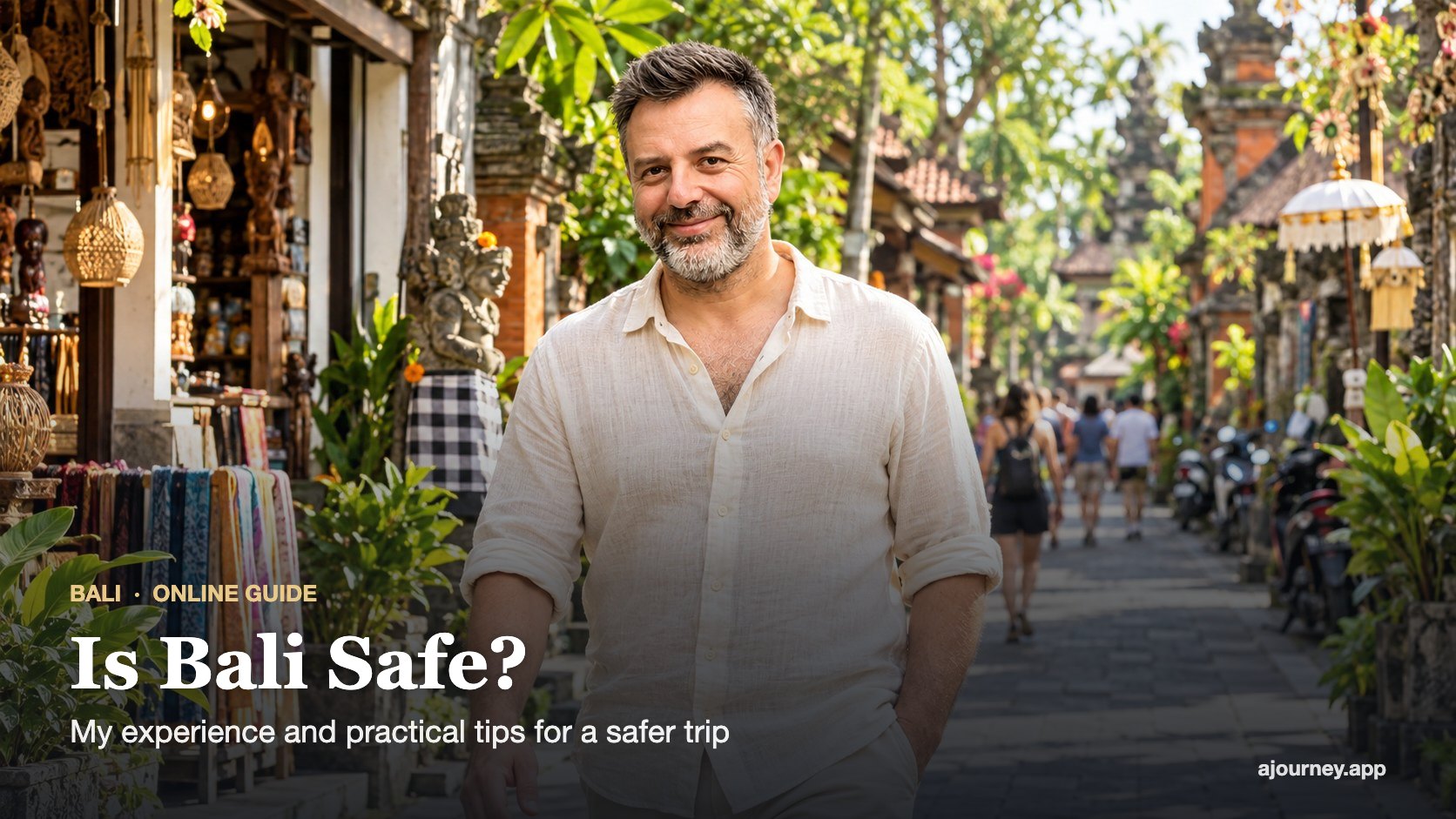
By Emre Konuralp · Updated October 2026
“Is Bali safe?” It is one of the most important questions I receive on Instagram, especially from women travelling alone and parents. I take every one of these messages seriously, so I want to answer as honestly as I can—from my own life in Ubud and the stories you have shared with me. You can always reach me at @ajourney.
Is Bali safe? Based on my own experience living in Ubud, I consider Bali a generally safe and welcoming holiday destination. Feeling threatened or worrying about theft has not been part of my everyday life here. Most of my interactions have been comfortable, friendly and straightforward.
However, that is my personal experience, not a promise that nothing can happen. The street you choose, the time of night, how you travel and where you keep your belongings all matter. I have had two small but memorable incidents myself, and some close friends have experienced situations that deserve more attention than the usual “Bali is completely safe” advice.
This guide combines what I have experienced, what friends have told me and practical precautions for enjoying the island with confidence.
My safety advice in one minute
- In my experience living in Ubud, Bali is a generally safe and welcoming destination.
- The most common problems are petty: bag or phone snatching from scooters and dishonest money changers.
- Put your phone away on a scooter and keep your bag on the side away from the road.
- Use only authorised money changers, count the money yourself and ask for a receipt.
- Plan your ride home before a night out, and treat road safety as seriously as theft.
My Experience Living in Ubud
I live in Ubud, and I generally feel very comfortable here. There have been times when I accidentally left my bag or phone on my scooter, or left the key in the ignition. In central places with people around, I have never had a problem on those occasions.
I share this because it explains my feeling of trust, not because I recommend doing the same. A forgotten phone is still an easy opportunity for someone passing by. Today, my advice is simple: take your valuables with you, remove the key and lock the scooter, even when you only plan to be away for a minute.
There was one exception. I once left a new, attractive helmet on my scooter overnight in a very quiet street. It was gone the next day. That experience reminded me that a place can feel safe and still have opportunistic theft. I would now secure the helmet properly or take it inside.
My practical takeaway: familiarity should make you relaxed, not careless. A busy daytime street and an isolated lane at night are different situations, even within Ubud.
Ubud, Canggu and Seminyak: Why My Experiences Differ
I have heard about people in Canggu having a phone taken from their hand or a bag snatched while sitting on the back of a scooter. These are accounts I have heard, rather than incidents I personally witnessed. They are still a useful reminder to keep belongings secure while travelling.
In Seminyak, there have been late-night moments when a male friend and I felt mildly uneasy walking outside, even though there were two of us. Nothing happened to us, but the feeling was enough to make me more selective about routes and transport after dark.
I have not heard the same kinds of stories within my own circle in Ubud or other parts of Bali. That does not prove they do not happen there. I would not use my personal network to rank whole areas by crime rate.
For a visitor, I think the more useful question is: “What is this particular street like right now?” Look at lighting, whether businesses are open, whether other people are around and how easily you can get transport. Accommodation can look central on a map while its final access lane is dark or deserted.
Hospitality and professional standards also vary between individuals and businesses. I judge a driver or service by their behaviour, verified booking details and reliability, rather than where they come from.
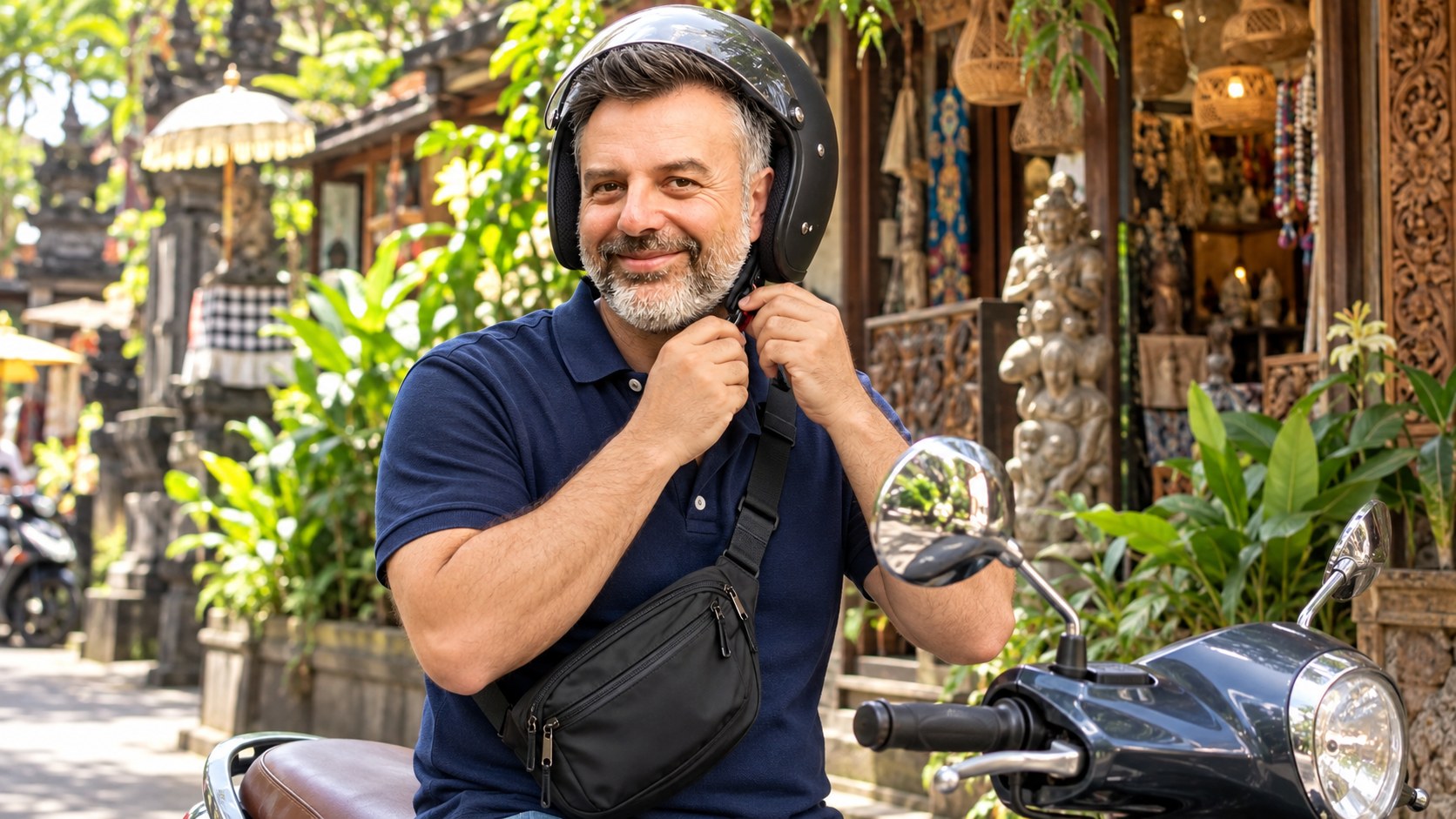
Keeping Your Phone and Bag Safe on a Scooter
If you are a passenger, scrolling on your phone can feel like an easy way to pass the journey. It also leaves something valuable exposed beside the road. A loosely hanging handbag is similarly easy to grab, and a sudden pull could affect your balance.
- Put your phone away before the scooter starts moving.
- Keep your bag zipped, close to your body and away from the outer roadside edge.
- Avoid a long strap or loose bag dangling beside the vehicle.
- If you need to check directions or send a message, ask the driver to stop somewhere safe.
- Carry only the cash and valuables you need for that outing.
- If a theft occurs, prioritise staying upright and avoiding injury. Do not chase another vehicle.
These are small habits that help you enjoy the ride without constantly worrying about your belongings.
Gojek, Grab and Personal Safety
Gojek and Grab are convenient ways to arrange transport, but a booking through an app is not a guarantee of appropriate behaviour. I have heard about women experiencing unwanted advances from motorcycle taxi drivers, and close friends have told me about uncomfortable experiences of this kind.
I cannot independently verify every account or estimate how common these incidents are. I do think they deserve to be taken seriously. Someone crossing your boundaries is not something you have to dismiss to avoid seeming impolite.
- Book through the official app and keep the trip recorded there.
- Before boarding, compare the driver and vehicle with the booking details. Do not accept a substitute whose details do not match.
- Share your journey with someone you trust.
- Wait at a visible pickup point rather than in a deserted side lane.
- If a driver makes you uncomfortable before departure, cancel and choose another option.
- If something feels wrong during the trip, ask to stop at a busy, safe place when you can do so safely.
- For a late-night return, consider an app-booked car or transport arranged by accommodation you trust.
If harassment occurs, get somewhere safe first. Save the booking information and report the incident through the platform. For threats, assault or immediate danger, seek police or emergency help as well. The responsibility for harassment belongs to the person doing it.
Is Bali Safe for Women Travelling Alone?
My overall impression is that Bali can be a comfortable destination for women travelling independently. That impression comes from my life here and the experiences people have shared with me. I would still avoid describing every part of Bali as safe for a woman to walk alone late at night.
Official UK and Australian travel advice warns about sexual assault in Bali and urges caution at night and in taxis or rideshares. This needs to sit alongside positive personal experiences, rather than disappear behind them.
Before booking accommodation, ask how guests usually return after dark and whether the entrance is staffed or easy to reach. Keep a working phone, enough battery and an alternative way to pay for transport. Choose a busy, well-lit route, and arrange a ride if the walk involves isolated stretches. You do not need to wait for a definite threat to change your plan.
Feeling confident and making sensible plans can coexist. The aim is to give yourself options, not to spend your holiday afraid.
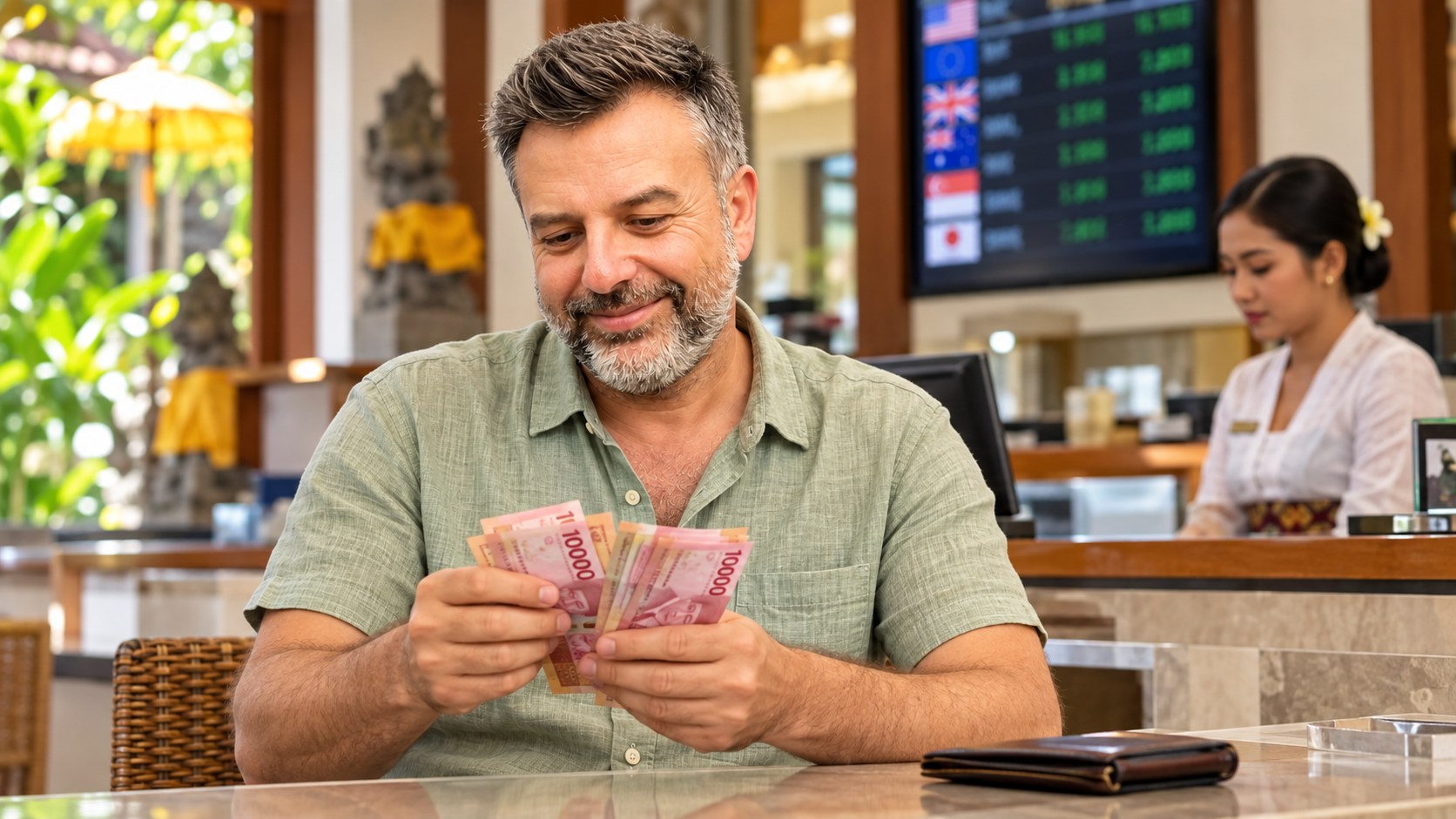
The Money-Changer Scam I Experienced
I once used a rough-looking currency exchange booth and later realised that three or four rupiah banknotes were missing. I had counted the money, but somehow notes appeared to have been removed after my count. I did not see exactly how it happened, so I cannot describe the method with certainty.
That was enough to change my approach. An attractive exchange rate means very little if you leave with less money than you should have received.
- Choose an established, authorised currency exchange rather than an improvised booth.
- Check the rate, any commission and the final amount before handing over your money.
- Count the rupiah yourself and be the last person to handle the final stack before putting it away.
- If anyone handles the notes after your count, count the entire amount again.
- Stay focused on the transaction rather than chatting or using your phone.
- Ask for a receipt and walk away if the process becomes confusing or pressured.
UK travel advice recommends licensed exchanges with Bank Indonesia identification and checking the business through its licence QR code. My own lesson is even simpler: use a proper business and never let the final count become someone else’s responsibility.
Honesty, Balinese Hospitality and Everyday Payments
One of the things I appreciate most about Bali is the warmth I have encountered in everyday life. Many people I meet are deeply connected to spiritual practice, family and community traditions. That atmosphere contributes to the trust I feel here.
In my own routine shopping and restaurant visits, deliberate dishonesty has been unusual. But I would not treat religious belief as proof that every transaction will be fair. My money-changing experience is a good reminder that trust still needs ordinary checks.
Confirm the price before a service starts, check whether tax or service charges are additional and glance at the bill before paying. In markets, agree on a price you are comfortable with. Bargaining or a higher tourist-facing price is not automatically a scam; undisclosed charges or deception are a different issue.
Be friendly, respectful and attentive. Those habits fit Bali’s welcoming atmosphere very well.
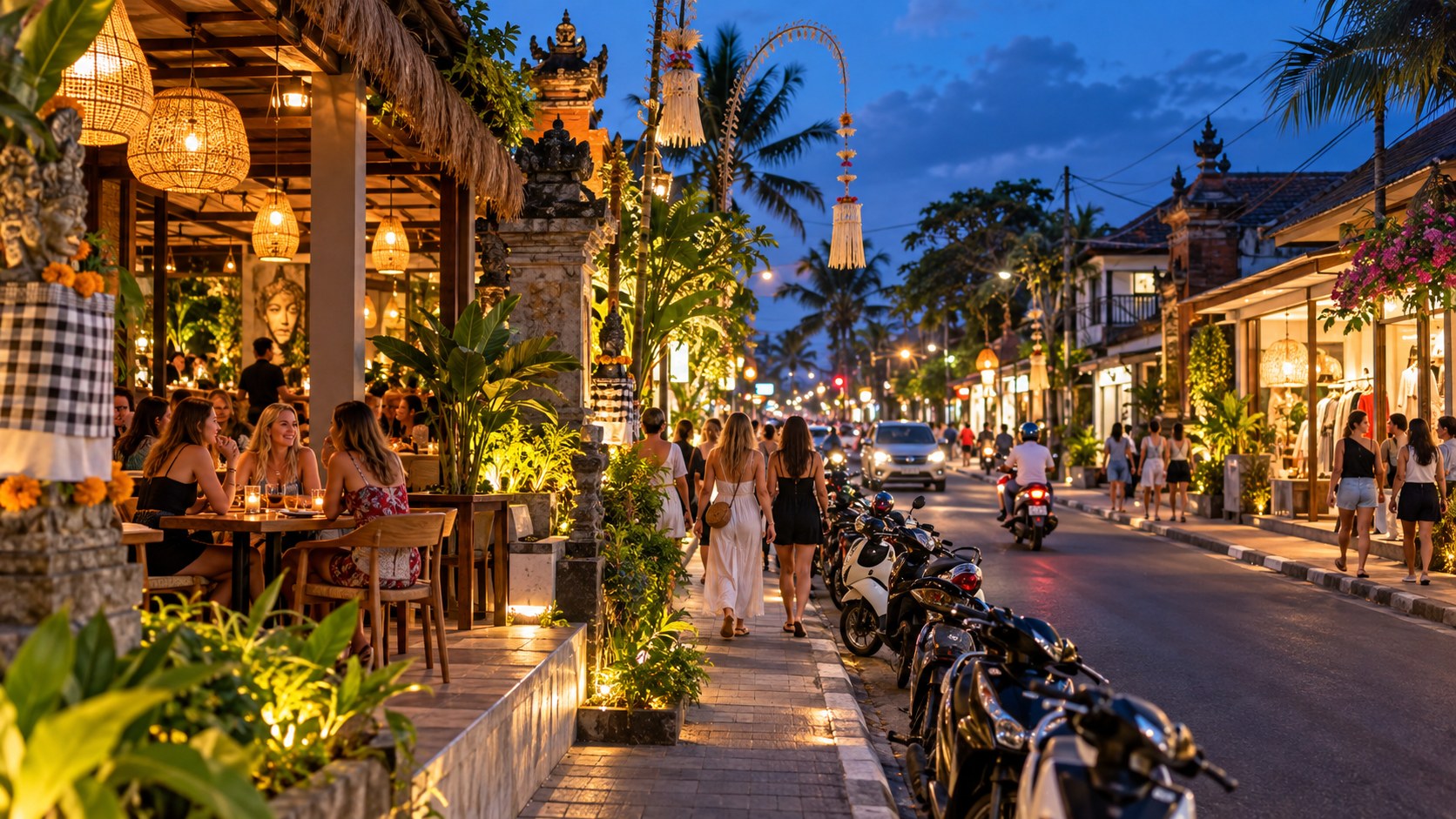
Nightlife: Make the Journey Home Part of the Plan
A good evening includes a straightforward way back to your accommodation. Decide on transport before you become tired, lose phone battery or find yourself somewhere unfamiliar.
Watch drinks being prepared and keep them with you. Official advice warns about drink spiking and methanol contamination in Indonesia. Avoid unknown or suspiciously cheap spirits; a familiar-looking bottle or a licensed venue does not guarantee that alcohol is safe. Seek urgent medical help if you suspect poisoning.
If a venue, interaction or street starts to feel uncomfortable, leave while you still have easy options. Moving to a staffed restaurant or hotel lobby can give you somewhere visible to arrange your next step.
Safety Beyond Theft: Roads, Water and Outdoor Activities
Personal security is only one part of a safe holiday. Transport and outdoor activities deserve attention too.
Scooters and road travel
Do not let Bali’s relaxed atmosphere persuade you to ride beyond your ability. Use a properly fastened helmet as a rider or passenger. Check that your licence and insurance cover your vehicle and activity. If you are inexperienced, choose a car with a driver instead of learning in unfamiliar traffic. Avoid riding after drinking or when exhausted.
Beaches and boat trips
Australian travel advice warns about strong currents, unpatrolled beaches and variable boat safety. Follow beach warnings and lifeguard instructions. Check that a boat has suitable life jackets and choose an operator that takes weather conditions seriously. A beautiful sea view is not a measure of safe swimming conditions.
Waterfalls, heavy rain and animals
Wear footwear with grip on wet steps, stay within visitor areas and follow local closures. Do not enter floodwater or cross a swollen stream to complete an itinerary. Give monkeys and unfamiliar dogs space rather than approaching them for a photograph.
Keep an eye on local weather and official alerts when planning remote activities. Your accommodation or guide can help you reassess a route when conditions change.
If Something Goes Wrong
Move to a safe, staffed place and ask for help. Your accommodation can assist with local directions, contacting services and communicating your location. Save receipts, trip details and relevant screenshots when practical.
- Police: 110.
- Medical emergencies: 119.
- Ambulance and rescue: 118.
These numbers are listed in Australian travel advice. Response and language support can vary, so also save your accommodation’s number and a nearby hospital contact before you need them. If a number does not connect, ask staff to help contact local services immediately.
For stolen cards or a phone, contact your bank or mobile provider promptly. For a stolen passport, contact your embassy or consulate and ask about the police report and replacement process. After an assault, seek medical care and support even if you are unsure about making a report immediately.
My Advice Before You Go
I feel safe living in Ubud, and I would still describe Bali as a welcoming place to visit. My stolen helmet and missing banknotes did not change that overall impression. They taught me where a few practical habits make a difference.
Take your belongings with you, verify your transport, choose a sensible route home and count your money carefully. Let yourself enjoy the island’s warmth while keeping enough awareness to recognise when a situation deserves a different choice.
That is how I approach safety in Bali: relaxed, respectful and attentive.
Frequently Asked Questions
Is Bali safe for tourists?
In my experience, yes—Bali is generally safe and friendly. Petty theft and scams do happen, especially in busy areas, and road traffic is a bigger everyday risk than crime.
Is Bali safe for women travelling alone?
Many women travel independently in Bali without problems. I would still avoid walking alone late at night in quiet areas, keep your transport plans clear and share your trip details with someone you trust.
Are Grab and Gojek safe in Bali?
They are convenient and widely used. Always check that the driver, vehicle and plate match the app, share your trip with a friend and choose a car instead of a motorbike taxi late at night if you feel more comfortable.
How can I avoid money changer scams in Bali?
Use an established, authorised money changer with clearly displayed rates, count the money yourself before you leave the counter and ask for a printed receipt.
What are the emergency numbers in Bali?
Police: 110. Medical emergencies: 119. Ambulance and rescue: 118. Your accommodation can also help you contact services and explain your location.
Related Bali Guides
- Bali Airport Arrival Guide
- Bali Visa & Entry Guide
- Flights to Bali
- Bali SIM Card & Internet Guide
- Bali Money & Payments Guide
- What to Pack for Bali
- Bali Climate & Weather
- Culture & Etiquette in Bali
- Wildlife & Animals in Bali
- How to Plan Your Bali Itinerary
Follow my Bali life day by day
I share the places, people and little discoveries behind these guides on our Instagram. Say hello and follow us at @ajourney for my real experiences in Bali.
Sources and Further Reading
Personal accounts above are my own experiences or stories shared with me, not crime statistics. Practical official guidance was checked on 30 September 2026. Check the latest advice before travelling.
Images are AI-created editorial illustrations using my reference photograph; they do not document the incidents described.
By Emre Konuralp · Updated October 2026
“Is Bali safe?” It is one of the most important questions I receive on Instagram, especially from women travelling alone and parents. I take every one of these messages seriously, so I want to answer as honestly as I can—from my own life in Ubud and the stories you have shared with me. You can always reach me at @ajourney.
Is Bali safe? Based on my own experience living in Ubud, I consider Bali a generally safe and welcoming holiday destination. Feeling threatened or worrying about theft has not been part of my everyday life here. Most of my interactions have been comfortable, friendly and straightforward.
However, that is my personal experience, not a promise that nothing can happen. The street you choose, the time of night, how you travel and where you keep your belongings all matter. I have had two small but memorable incidents myself, and some close friends have experienced situations that deserve more attention than the usual “Bali is completely safe” advice.
This guide combines what I have experienced, what friends have told me and practical precautions for enjoying the island with confidence.
My safety advice in one minute
- In my experience living in Ubud, Bali is a generally safe and welcoming destination.
- The most common problems are petty: bag or phone snatching from scooters and dishonest money changers.
- Put your phone away on a scooter and keep your bag on the side away from the road.
- Use only authorised money changers, count the money yourself and ask for a receipt.
- Plan your ride home before a night out, and treat road safety as seriously as theft.
My Experience Living in Ubud
I live in Ubud, and I generally feel very comfortable here. There have been times when I accidentally left my bag or phone on my scooter, or left the key in the ignition. In central places with people around, I have never had a problem on those occasions.
I share this because it explains my feeling of trust, not because I recommend doing the same. A forgotten phone is still an easy opportunity for someone passing by. Today, my advice is simple: take your valuables with you, remove the key and lock the scooter, even when you only plan to be away for a minute.
There was one exception. I once left a new, attractive helmet on my scooter overnight in a very quiet street. It was gone the next day. That experience reminded me that a place can feel safe and still have opportunistic theft. I would now secure the helmet properly or take it inside.
My practical takeaway: familiarity should make you relaxed, not careless. A busy daytime street and an isolated lane at night are different situations, even within Ubud.
Ubud, Canggu and Seminyak: Why My Experiences Differ
I have heard about people in Canggu having a phone taken from their hand or a bag snatched while sitting on the back of a scooter. These are accounts I have heard, rather than incidents I personally witnessed. They are still a useful reminder to keep belongings secure while travelling.
In Seminyak, there have been late-night moments when a male friend and I felt mildly uneasy walking outside, even though there were two of us. Nothing happened to us, but the feeling was enough to make me more selective about routes and transport after dark.
I have not heard the same kinds of stories within my own circle in Ubud or other parts of Bali. That does not prove they do not happen there. I would not use my personal network to rank whole areas by crime rate.
For a visitor, I think the more useful question is: “What is this particular street like right now?” Look at lighting, whether businesses are open, whether other people are around and how easily you can get transport. Accommodation can look central on a map while its final access lane is dark or deserted.
Hospitality and professional standards also vary between individuals and businesses. I judge a driver or service by their behaviour, verified booking details and reliability, rather than where they come from.
Keeping Your Phone and Bag Safe on a Scooter
If you are a passenger, scrolling on your phone can feel like an easy way to pass the journey. It also leaves something valuable exposed beside the road. A loosely hanging handbag is similarly easy to grab, and a sudden pull could affect your balance.
- Put your phone away before the scooter starts moving.
- Keep your bag zipped, close to your body and away from the outer roadside edge.
- Avoid a long strap or loose bag dangling beside the vehicle.
- If you need to check directions or send a message, ask the driver to stop somewhere safe.
- Carry only the cash and valuables you need for that outing.
- If a theft occurs, prioritise staying upright and avoiding injury. Do not chase another vehicle.
These are small habits that help you enjoy the ride without constantly worrying about your belongings.
Gojek, Grab and Personal Safety
Gojek and Grab are convenient ways to arrange transport, but a booking through an app is not a guarantee of appropriate behaviour. I have heard about women experiencing unwanted advances from motorcycle taxi drivers, and close friends have told me about uncomfortable experiences of this kind.
I cannot independently verify every account or estimate how common these incidents are. I do think they deserve to be taken seriously. Someone crossing your boundaries is not something you have to dismiss to avoid seeming impolite.
- Book through the official app and keep the trip recorded there.
- Before boarding, compare the driver and vehicle with the booking details. Do not accept a substitute whose details do not match.
- Share your journey with someone you trust.
- Wait at a visible pickup point rather than in a deserted side lane.
- If a driver makes you uncomfortable before departure, cancel and choose another option.
- If something feels wrong during the trip, ask to stop at a busy, safe place when you can do so safely.
- For a late-night return, consider an app-booked car or transport arranged by accommodation you trust.
If harassment occurs, get somewhere safe first. Save the booking information and report the incident through the platform. For threats, assault or immediate danger, seek police or emergency help as well. The responsibility for harassment belongs to the person doing it.
Is Bali Safe for Women Travelling Alone?
My overall impression is that Bali can be a comfortable destination for women travelling independently. That impression comes from my life here and the experiences people have shared with me. I would still avoid describing every part of Bali as safe for a woman to walk alone late at night.
Official UK and Australian travel advice warns about sexual assault in Bali and urges caution at night and in taxis or rideshares. This needs to sit alongside positive personal experiences, rather than disappear behind them.
Before booking accommodation, ask how guests usually return after dark and whether the entrance is staffed or easy to reach. Keep a working phone, enough battery and an alternative way to pay for transport. Choose a busy, well-lit route, and arrange a ride if the walk involves isolated stretches. You do not need to wait for a definite threat to change your plan.
Feeling confident and making sensible plans can coexist. The aim is to give yourself options, not to spend your holiday afraid.
The Money-Changer Scam I Experienced
I once used a rough-looking currency exchange booth and later realised that three or four rupiah banknotes were missing. I had counted the money, but somehow notes appeared to have been removed after my count. I did not see exactly how it happened, so I cannot describe the method with certainty.
That was enough to change my approach. An attractive exchange rate means very little if you leave with less money than you should have received.
- Choose an established, authorised currency exchange rather than an improvised booth.
- Check the rate, any commission and the final amount before handing over your money.
- Count the rupiah yourself and be the last person to handle the final stack before putting it away.
- If anyone handles the notes after your count, count the entire amount again.
- Stay focused on the transaction rather than chatting or using your phone.
- Ask for a receipt and walk away if the process becomes confusing or pressured.
UK travel advice recommends licensed exchanges with Bank Indonesia identification and checking the business through its licence QR code. My own lesson is even simpler: use a proper business and never let the final count become someone else’s responsibility.
Honesty, Balinese Hospitality and Everyday Payments
One of the things I appreciate most about Bali is the warmth I have encountered in everyday life. Many people I meet are deeply connected to spiritual practice, family and community traditions. That atmosphere contributes to the trust I feel here.
In my own routine shopping and restaurant visits, deliberate dishonesty has been unusual. But I would not treat religious belief as proof that every transaction will be fair. My money-changing experience is a good reminder that trust still needs ordinary checks.
Confirm the price before a service starts, check whether tax or service charges are additional and glance at the bill before paying. In markets, agree on a price you are comfortable with. Bargaining or a higher tourist-facing price is not automatically a scam; undisclosed charges or deception are a different issue.
Be friendly, respectful and attentive. Those habits fit Bali’s welcoming atmosphere very well.
Nightlife: Make the Journey Home Part of the Plan
A good evening includes a straightforward way back to your accommodation. Decide on transport before you become tired, lose phone battery or find yourself somewhere unfamiliar.
Watch drinks being prepared and keep them with you. Official advice warns about drink spiking and methanol contamination in Indonesia. Avoid unknown or suspiciously cheap spirits; a familiar-looking bottle or a licensed venue does not guarantee that alcohol is safe. Seek urgent medical help if you suspect poisoning.
If a venue, interaction or street starts to feel uncomfortable, leave while you still have easy options. Moving to a staffed restaurant or hotel lobby can give you somewhere visible to arrange your next step.
Safety Beyond Theft: Roads, Water and Outdoor Activities
Personal security is only one part of a safe holiday. Transport and outdoor activities deserve attention too.
Scooters and road travel
Do not let Bali’s relaxed atmosphere persuade you to ride beyond your ability. Use a properly fastened helmet as a rider or passenger. Check that your licence and insurance cover your vehicle and activity. If you are inexperienced, choose a car with a driver instead of learning in unfamiliar traffic. Avoid riding after drinking or when exhausted.
Beaches and boat trips
Australian travel advice warns about strong currents, unpatrolled beaches and variable boat safety. Follow beach warnings and lifeguard instructions. Check that a boat has suitable life jackets and choose an operator that takes weather conditions seriously. A beautiful sea view is not a measure of safe swimming conditions.
Waterfalls, heavy rain and animals
Wear footwear with grip on wet steps, stay within visitor areas and follow local closures. Do not enter floodwater or cross a swollen stream to complete an itinerary. Give monkeys and unfamiliar dogs space rather than approaching them for a photograph.
Keep an eye on local weather and official alerts when planning remote activities. Your accommodation or guide can help you reassess a route when conditions change.
If Something Goes Wrong
Move to a safe, staffed place and ask for help. Your accommodation can assist with local directions, contacting services and communicating your location. Save receipts, trip details and relevant screenshots when practical.
- Police: 110.
- Medical emergencies: 119.
- Ambulance and rescue: 118.
These numbers are listed in Australian travel advice. Response and language support can vary, so also save your accommodation’s number and a nearby hospital contact before you need them. If a number does not connect, ask staff to help contact local services immediately.
For stolen cards or a phone, contact your bank or mobile provider promptly. For a stolen passport, contact your embassy or consulate and ask about the police report and replacement process. After an assault, seek medical care and support even if you are unsure about making a report immediately.
My Advice Before You Go
I feel safe living in Ubud, and I would still describe Bali as a welcoming place to visit. My stolen helmet and missing banknotes did not change that overall impression. They taught me where a few practical habits make a difference.
Take your belongings with you, verify your transport, choose a sensible route home and count your money carefully. Let yourself enjoy the island’s warmth while keeping enough awareness to recognise when a situation deserves a different choice.
That is how I approach safety in Bali: relaxed, respectful and attentive.
Frequently Asked Questions
Is Bali safe for tourists?
In my experience, yes—Bali is generally safe and friendly. Petty theft and scams do happen, especially in busy areas, and road traffic is a bigger everyday risk than crime.
Is Bali safe for women travelling alone?
Many women travel independently in Bali without problems. I would still avoid walking alone late at night in quiet areas, keep your transport plans clear and share your trip details with someone you trust.
Are Grab and Gojek safe in Bali?
They are convenient and widely used. Always check that the driver, vehicle and plate match the app, share your trip with a friend and choose a car instead of a motorbike taxi late at night if you feel more comfortable.
How can I avoid money changer scams in Bali?
Use an established, authorised money changer with clearly displayed rates, count the money yourself before you leave the counter and ask for a printed receipt.
What are the emergency numbers in Bali?
Police: 110. Medical emergencies: 119. Ambulance and rescue: 118. Your accommodation can also help you contact services and explain your location.
Related Bali Guides
- Bali Airport Arrival Guide
- Bali Visa & Entry Guide
- Flights to Bali
- Bali SIM Card & Internet Guide
- Bali Money & Payments Guide
- What to Pack for Bali
- Bali Climate & Weather
- Culture & Etiquette in Bali
- Wildlife & Animals in Bali
- How to Plan Your Bali Itinerary
Follow my Bali life day by day
I share the places, people and little discoveries behind these guides on our Instagram. Say hello and follow us at @ajourney for my real experiences in Bali.
Sources and Further Reading
Personal accounts above are my own experiences or stories shared with me, not crime statistics. Practical official guidance was checked on 30 September 2026. Check the latest advice before travelling.
Images are AI-created editorial illustrations using my reference photograph; they do not document the incidents described.