

By Emre Konuralp · Updated October 2026
“Can I drink the water?” “Do I need vaccines?” “How do I avoid Bali belly?” Health questions are some of the most frequent messages I receive from our Instagram community—and some of the most important. Here are my honest answers from daily life in Ubud. You can always find me and my latest updates at @ajourney.
Living in Ubud, I have learned that staying healthy in Bali is mostly about small daily habits: what you drink, how you protect yourself from the sun and mosquitoes, and knowing where to go if something goes wrong. The good news? With a bit of awareness, most travellers never have a serious problem.
This is my practical guide to staying healthy in Bali—from the famous “Bali belly” to vaccines, tap water, dengue, rabies and pharmacies. I am not a doctor, so please speak to a travel clinic or your own doctor before your trip, especially about vaccines and medication.
My health rules in Bali
- Don’t drink tap water—use filtered or bottled water, and refill your bottle where you can.
- Visit a travel clinic 4–8 weeks before your trip to check vaccines.
- Use mosquito repellent during the day too—dengue mosquitoes bite in daylight.
- Avoid touching dogs, cats and monkeys. Bali has rabies; any bite or scratch needs medical care.
- Carry oral rehydration salts, sunscreen and your insurance details.
1. Bali Belly: How to Avoid It
“Bali belly” is the nickname for traveller’s diarrhoea—usually caused by contaminated water or food. It is common, often mild, and mostly avoidable.
- Choose busy warungs and restaurants where food is freshly cooked and turns over quickly.
- Be careful with salads and raw food at very basic places.
- Wash or sanitise your hands before eating.
- Ice in established cafés and restaurants is generally made from purified water; at roadside stalls I am more careful.
- Avoid unbranded spirits and cheap cocktails—there have been serious cases of methanol poisoning in Indonesia. Stick to sealed, reputable drinks.
If it happens: rest, drink plenty of fluids and use oral rehydration salts. See a doctor if you have a high fever, blood in your stool, severe pain, or you cannot keep fluids down—or if it lasts more than a couple of days.
2. Tap Water: Don’t Drink It
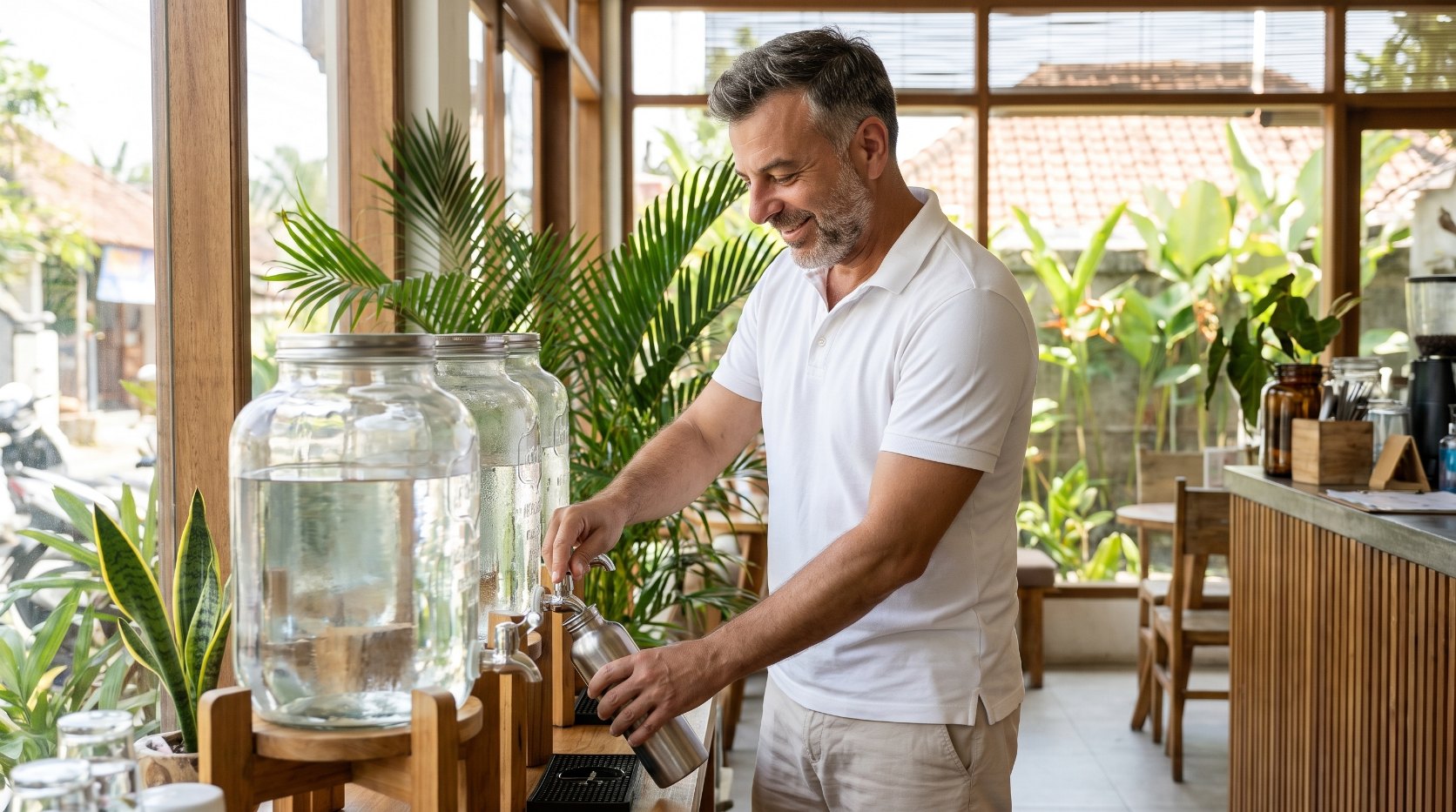
Tap water in Bali is not safe to drink. Brushing your teeth with it is something many people do, but if you have a sensitive stomach, use filtered water for that too. Most villas and hotels provide large refillable water dispensers, and many cafés and shops offer refill stations—a great way to avoid plastic bottles.
3. Vaccines: What to Ask Your Travel Clinic
Only your doctor can advise you based on your health, your age and your trip. These are the vaccines that are commonly discussed for travel to Indonesia:
- Routine vaccines (measles, tetanus-diphtheria and so on) up to date.
- Hepatitis A and typhoid—spread through food and water.
- Hepatitis B—especially for long stays or possible medical treatment.
- Rabies (pre-exposure)—worth discussing for long stays, outdoor activities or if you love animals.
- Japanese encephalitis—sometimes recommended for long stays in rural areas.
Book your appointment early: some vaccines need several doses over a few weeks.
4. Mosquitoes and Dengue Fever
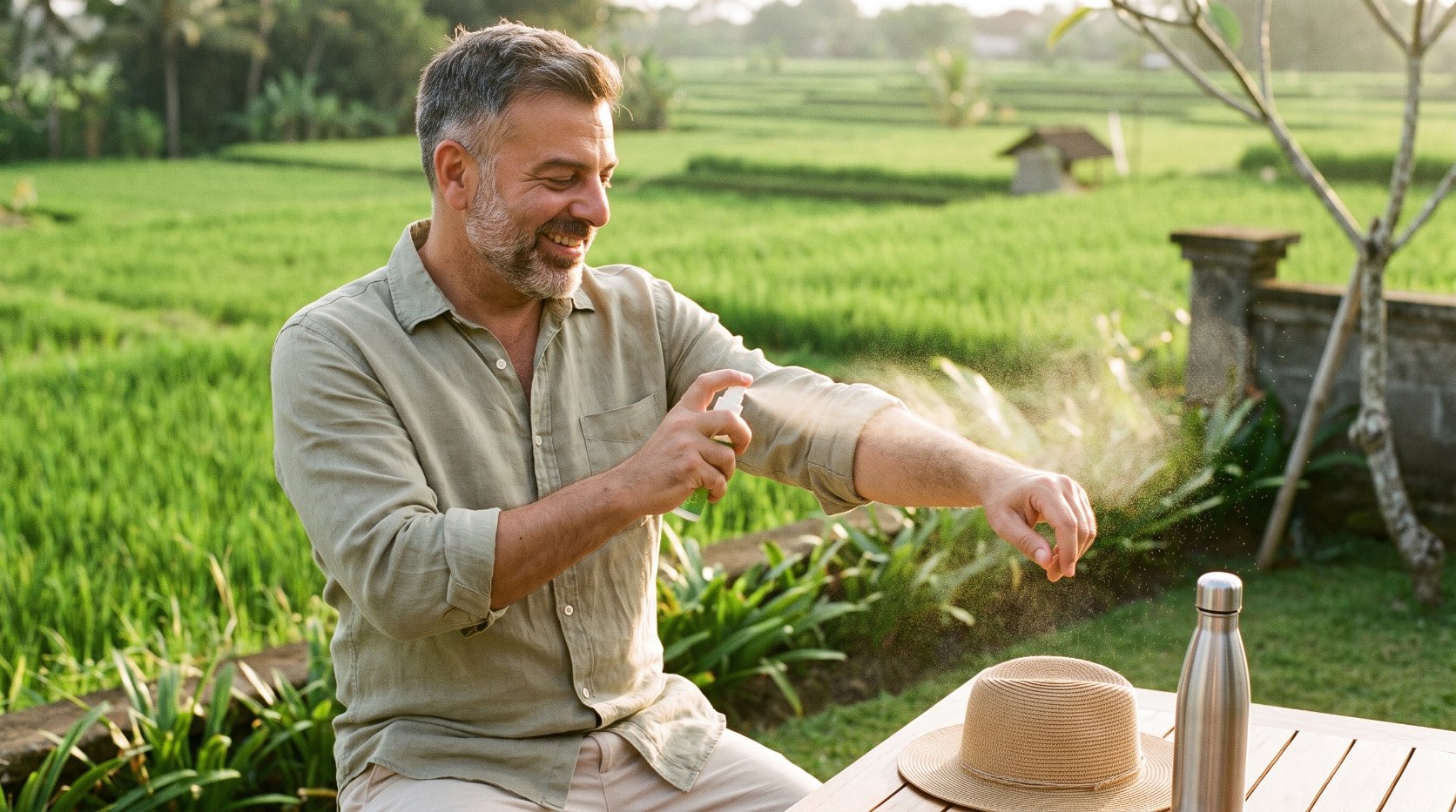
Dengue fever occurs in Bali, especially during and after the rainy season. The mosquitoes that spread it are active during the day, not only at night—something many visitors don’t realise.
- Use a repellent with DEET, picaridin or IR3535 and reapply it.
- Wear light long sleeves at dawn and dusk.
- Choose rooms with screens, air conditioning or a mosquito net.
- See a doctor if you develop a sudden high fever, headache, eye pain or body aches—especially within two weeks of a bite.
More about living with Bali’s insects and animals is in my Wildlife & Animals in Bali guide.
5. Rabies: Keep Your Distance from Animals
Rabies is present in Bali. The monkeys at temples and the dogs in villages may look friendly, but please don’t feed or touch them.
If you are bitten or scratched by a dog, cat or monkey: wash the wound with soap and running water for at least 15 minutes, then go to a clinic or hospital the same day for assessment and post-exposure treatment—even if you were vaccinated before.
6. Sun, Heat and Hydration
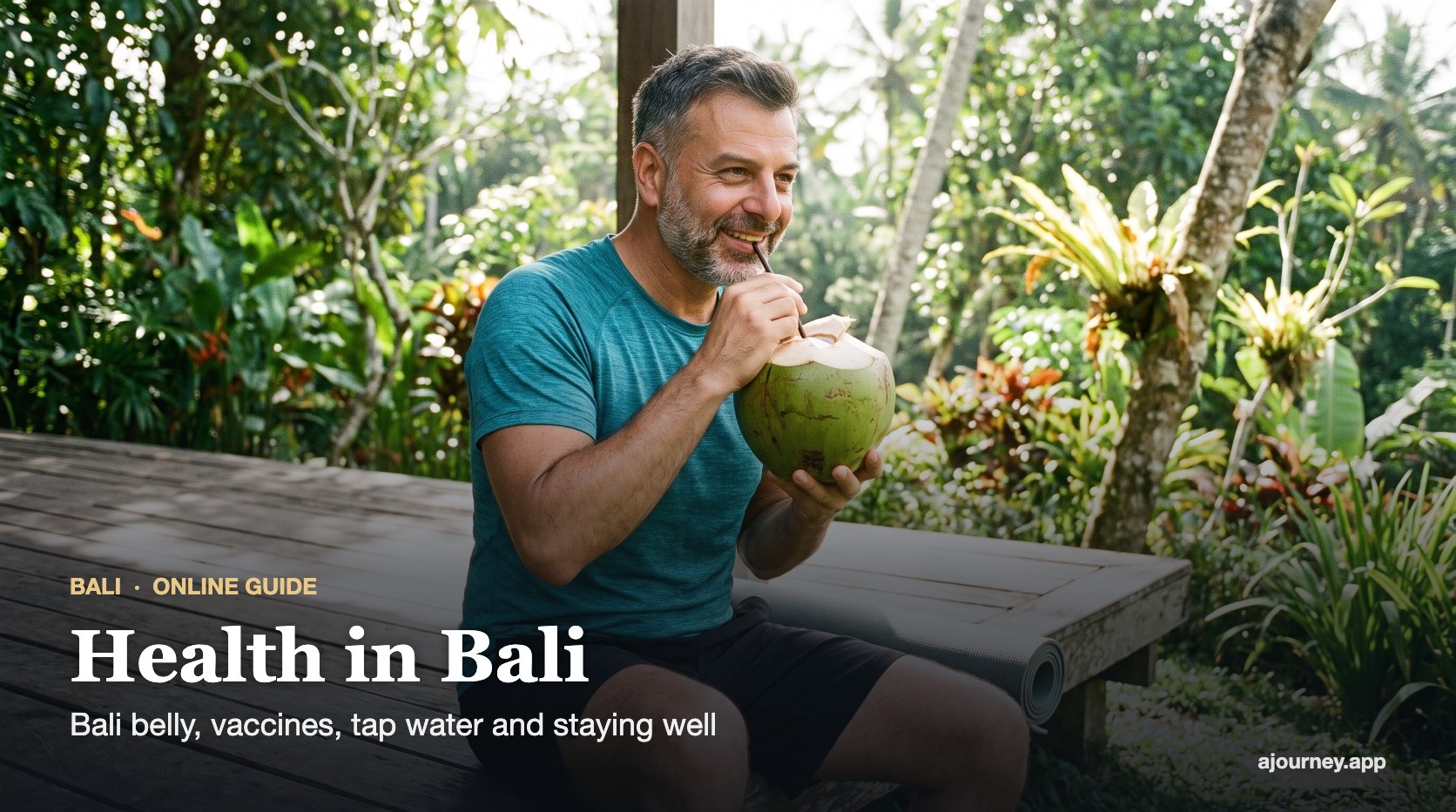
The tropical sun is strong, even when it’s cloudy. I wear high-SPF sunscreen, a hat and sunglasses, and I drink more water than I think I need—fresh coconuts are my favourite natural electrolyte drink. Plan active things for the morning and late afternoon, and rest in the middle of the day during your first days. More tips are in my Bali Climate & Weather guide.
7. Pharmacies and Clinics in Bali
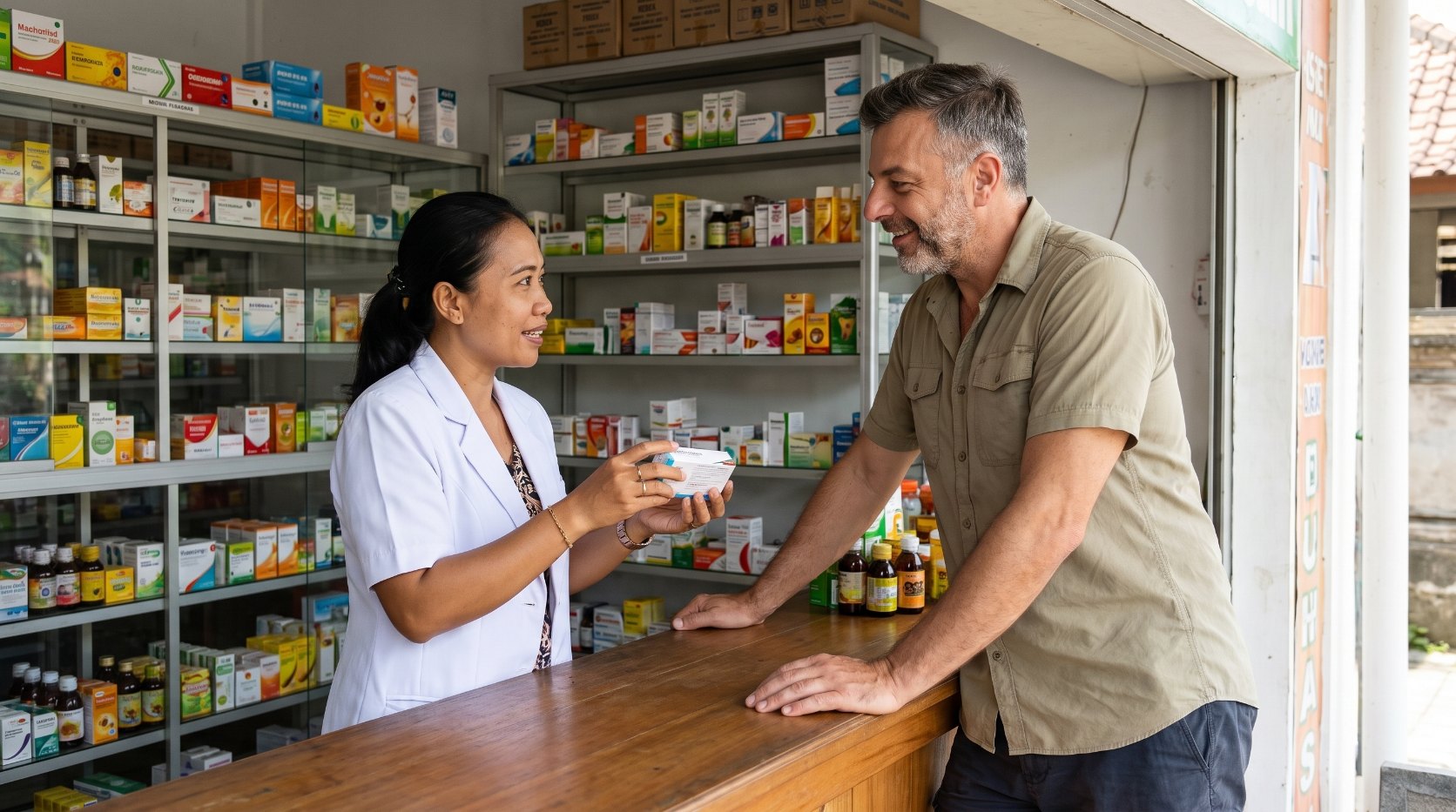
You will find pharmacies—called apotek—everywhere in tourist areas, and pharmacists often speak some English. For common problems like stomach upsets, minor cuts, insect bites or a cold, a pharmacy is a good first stop.
For anything more serious, Bali has private international-standard hospitals and clinics in Denpasar, Kuta, Seminyak, Nusa Dua and Ubud. Many clinics also do home or hotel visits. Ask your accommodation which clinic they recommend nearby, and contact your insurer’s assistance line before major treatment.
8. My Small Health Kit for Bali
- Prescription medication in original packaging, with a copy of the prescription.
- Oral rehydration salts and something for an upset stomach (ask your pharmacist at home).
- Insect repellent and after-bite cream.
- High-SPF sunscreen and after-sun.
- Plasters, antiseptic and a small bandage—coral cuts and scooter scrapes get infected easily in the humidity.
- Pain relief and any personal essentials.
Indonesia has strict rules on some medications—check before travelling with strong painkillers, sleeping pills or ADHD medication. I cover this in my Bali Visa & Entry Guide.
9. Emergency Numbers and Insurance
- 112 – general emergency
- 119 – medical emergency
- 110 – police
Private medical care is not cheap, and evacuation can be very expensive. Please travel with good insurance—my Bali Travel Insurance guide explains what it should cover.
10. My Honest Advice
Don’t let this list scare you. Bali is a place where many people come to feel healthier—yoga in the morning, fresh fruit, sunshine, long walks through rice fields. Drink safe water, respect the animals, protect yourself from mosquitoes and the sun, and you will most likely leave feeling better than when you arrived.
Frequently Asked Questions
Can you drink tap water in Bali?
No. Drink filtered or bottled water. Most hotels and villas provide refillable dispensers, and many cafés have refill stations.
What vaccines do I need for Bali?
Ask a travel clinic 4–8 weeks before your trip. Commonly discussed vaccines include routine vaccines, hepatitis A, typhoid and hepatitis B, and for some travellers rabies and Japanese encephalitis.
How can I avoid Bali belly?
Eat at busy places with freshly cooked food, wash your hands, avoid tap water and be careful with raw food at very basic stalls. Carry oral rehydration salts just in case.
Is there dengue in Bali?
Yes, especially around the rainy season. The mosquitoes bite during the day, so use repellent throughout the day and see a doctor if you develop a sudden high fever.
What should I do if a monkey or dog bites me in Bali?
Wash the wound with soap and running water for at least 15 minutes and go to a clinic the same day for rabies assessment and treatment.
Related Bali Guides
- Bali Travel Insurance
- Wildlife & Animals in Bali
- Safety in Bali
- Bali Climate & Weather
- What to Pack for Bali
- Bali Visa & Entry Guide
Follow my Bali life day by day
I share the places, people and little discoveries behind these guides on our Instagram. Say hello and follow us at @ajourney for my real experiences in Bali.
Sources and Further Reading
General health information is based on official travel-health guidance for Indonesia. This guide is not medical advice—please consult a doctor or travel clinic before your trip.
Images are AI-created editorial illustrations using Emre Konuralp’s portrait reference where shown. They illustrate the guide rather than document a specific visit.
By Emre Konuralp · Updated October 2026
“Can I drink the water?” “Do I need vaccines?” “How do I avoid Bali belly?” Health questions are some of the most frequent messages I receive from our Instagram community—and some of the most important. Here are my honest answers from daily life in Ubud. You can always find me and my latest updates at @ajourney.
Living in Ubud, I have learned that staying healthy in Bali is mostly about small daily habits: what you drink, how you protect yourself from the sun and mosquitoes, and knowing where to go if something goes wrong. The good news? With a bit of awareness, most travellers never have a serious problem.
This is my practical guide to staying healthy in Bali—from the famous “Bali belly” to vaccines, tap water, dengue, rabies and pharmacies. I am not a doctor, so please speak to a travel clinic or your own doctor before your trip, especially about vaccines and medication.
My health rules in Bali
- Don’t drink tap water—use filtered or bottled water, and refill your bottle where you can.
- Visit a travel clinic 4–8 weeks before your trip to check vaccines.
- Use mosquito repellent during the day too—dengue mosquitoes bite in daylight.
- Avoid touching dogs, cats and monkeys. Bali has rabies; any bite or scratch needs medical care.
- Carry oral rehydration salts, sunscreen and your insurance details.
1. Bali Belly: How to Avoid It
“Bali belly” is the nickname for traveller’s diarrhoea—usually caused by contaminated water or food. It is common, often mild, and mostly avoidable.
- Choose busy warungs and restaurants where food is freshly cooked and turns over quickly.
- Be careful with salads and raw food at very basic places.
- Wash or sanitise your hands before eating.
- Ice in established cafés and restaurants is generally made from purified water; at roadside stalls I am more careful.
- Avoid unbranded spirits and cheap cocktails—there have been serious cases of methanol poisoning in Indonesia. Stick to sealed, reputable drinks.
If it happens: rest, drink plenty of fluids and use oral rehydration salts. See a doctor if you have a high fever, blood in your stool, severe pain, or you cannot keep fluids down—or if it lasts more than a couple of days.
2. Tap Water: Don’t Drink It
Tap water in Bali is not safe to drink. Brushing your teeth with it is something many people do, but if you have a sensitive stomach, use filtered water for that too. Most villas and hotels provide large refillable water dispensers, and many cafés and shops offer refill stations—a great way to avoid plastic bottles.
3. Vaccines: What to Ask Your Travel Clinic
Only your doctor can advise you based on your health, your age and your trip. These are the vaccines that are commonly discussed for travel to Indonesia:
- Routine vaccines (measles, tetanus-diphtheria and so on) up to date.
- Hepatitis A and typhoid—spread through food and water.
- Hepatitis B—especially for long stays or possible medical treatment.
- Rabies (pre-exposure)—worth discussing for long stays, outdoor activities or if you love animals.
- Japanese encephalitis—sometimes recommended for long stays in rural areas.
Book your appointment early: some vaccines need several doses over a few weeks.
4. Mosquitoes and Dengue Fever
Dengue fever occurs in Bali, especially during and after the rainy season. The mosquitoes that spread it are active during the day, not only at night—something many visitors don’t realise.
- Use a repellent with DEET, picaridin or IR3535 and reapply it.
- Wear light long sleeves at dawn and dusk.
- Choose rooms with screens, air conditioning or a mosquito net.
- See a doctor if you develop a sudden high fever, headache, eye pain or body aches—especially within two weeks of a bite.
More about living with Bali’s insects and animals is in my Wildlife & Animals in Bali guide.
5. Rabies: Keep Your Distance from Animals
Rabies is present in Bali. The monkeys at temples and the dogs in villages may look friendly, but please don’t feed or touch them.
If you are bitten or scratched by a dog, cat or monkey: wash the wound with soap and running water for at least 15 minutes, then go to a clinic or hospital the same day for assessment and post-exposure treatment—even if you were vaccinated before.
6. Sun, Heat and Hydration
The tropical sun is strong, even when it’s cloudy. I wear high-SPF sunscreen, a hat and sunglasses, and I drink more water than I think I need—fresh coconuts are my favourite natural electrolyte drink. Plan active things for the morning and late afternoon, and rest in the middle of the day during your first days. More tips are in my Bali Climate & Weather guide.
7. Pharmacies and Clinics in Bali
You will find pharmacies—called apotek—everywhere in tourist areas, and pharmacists often speak some English. For common problems like stomach upsets, minor cuts, insect bites or a cold, a pharmacy is a good first stop.
For anything more serious, Bali has private international-standard hospitals and clinics in Denpasar, Kuta, Seminyak, Nusa Dua and Ubud. Many clinics also do home or hotel visits. Ask your accommodation which clinic they recommend nearby, and contact your insurer’s assistance line before major treatment.
8. My Small Health Kit for Bali
- Prescription medication in original packaging, with a copy of the prescription.
- Oral rehydration salts and something for an upset stomach (ask your pharmacist at home).
- Insect repellent and after-bite cream.
- High-SPF sunscreen and after-sun.
- Plasters, antiseptic and a small bandage—coral cuts and scooter scrapes get infected easily in the humidity.
- Pain relief and any personal essentials.
Indonesia has strict rules on some medications—check before travelling with strong painkillers, sleeping pills or ADHD medication. I cover this in my Bali Visa & Entry Guide.
9. Emergency Numbers and Insurance
- 112 – general emergency
- 119 – medical emergency
- 110 – police
Private medical care is not cheap, and evacuation can be very expensive. Please travel with good insurance—my Bali Travel Insurance guide explains what it should cover.
10. My Honest Advice
Don’t let this list scare you. Bali is a place where many people come to feel healthier—yoga in the morning, fresh fruit, sunshine, long walks through rice fields. Drink safe water, respect the animals, protect yourself from mosquitoes and the sun, and you will most likely leave feeling better than when you arrived.
Frequently Asked Questions
Can you drink tap water in Bali?
No. Drink filtered or bottled water. Most hotels and villas provide refillable dispensers, and many cafés have refill stations.
What vaccines do I need for Bali?
Ask a travel clinic 4–8 weeks before your trip. Commonly discussed vaccines include routine vaccines, hepatitis A, typhoid and hepatitis B, and for some travellers rabies and Japanese encephalitis.
How can I avoid Bali belly?
Eat at busy places with freshly cooked food, wash your hands, avoid tap water and be careful with raw food at very basic stalls. Carry oral rehydration salts just in case.
Is there dengue in Bali?
Yes, especially around the rainy season. The mosquitoes bite during the day, so use repellent throughout the day and see a doctor if you develop a sudden high fever.
What should I do if a monkey or dog bites me in Bali?
Wash the wound with soap and running water for at least 15 minutes and go to a clinic the same day for rabies assessment and treatment.
Related Bali Guides
- Bali Travel Insurance
- Wildlife & Animals in Bali
- Safety in Bali
- Bali Climate & Weather
- What to Pack for Bali
- Bali Visa & Entry Guide
Follow my Bali life day by day
I share the places, people and little discoveries behind these guides on our Instagram. Say hello and follow us at @ajourney for my real experiences in Bali.
Sources and Further Reading
General health information is based on official travel-health guidance for Indonesia. This guide is not medical advice—please consult a doctor or travel clinic before your trip.
Images are AI-created editorial illustrations using Emre Konuralp’s portrait reference where shown. They illustrate the guide rather than document a specific visit.